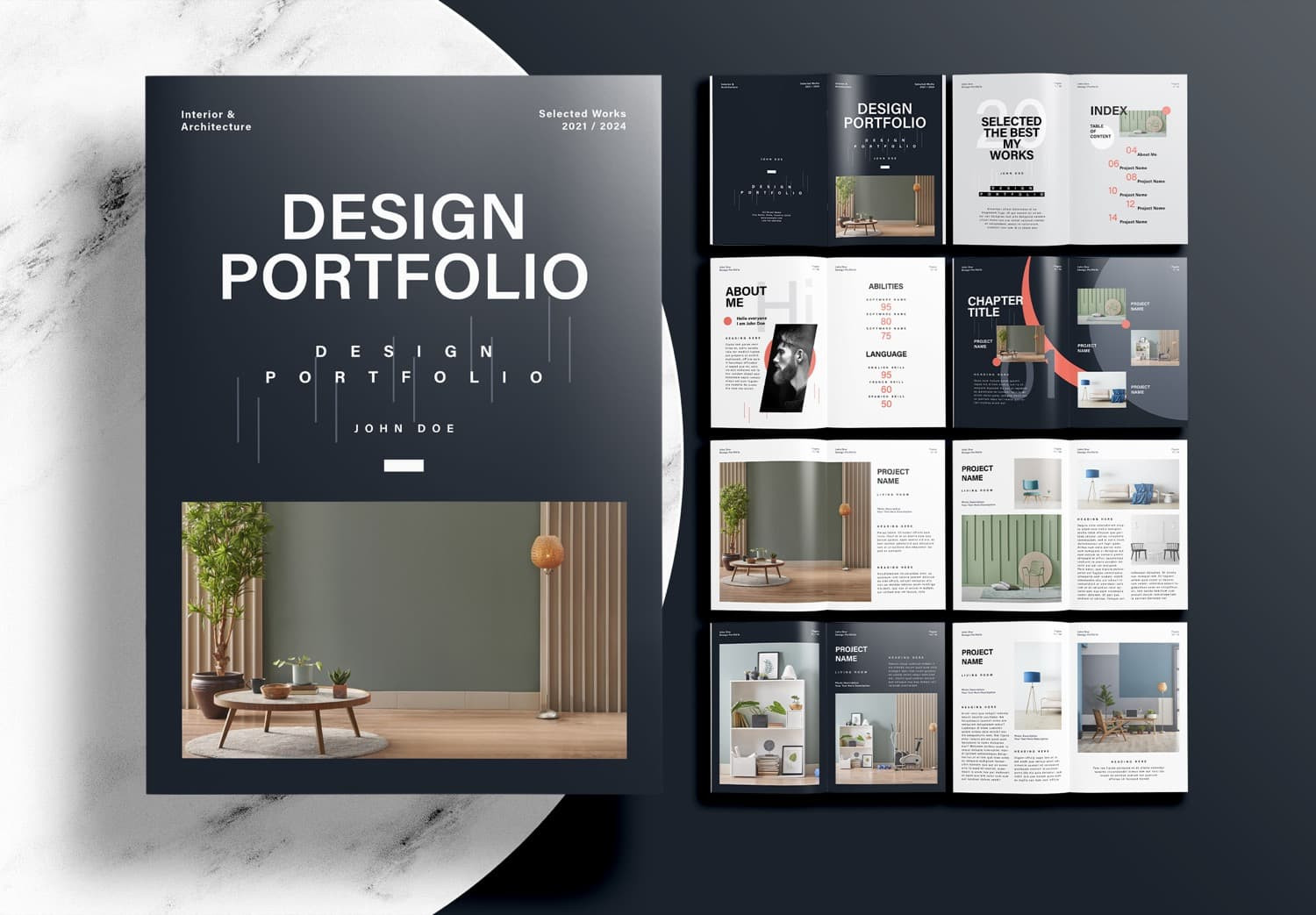
Why Interior Designers Should Upload a Portfolio Along With Their Resume
In this posting
Why portfolios matter → Here is our new solution → Screenshots showing how to use it
When you're looking for an interior design job, your resume is important. It tells employers where you've worked, what you've studied, what software you know, and what skills you've developed.
But interior design is a visual profession.
A resume can tell an employer that you know AutoCAD, Revit, SketchUp, space planning, materials selection, or project coordination. A portfolio can show them what you can actually do.
That is why interior designers should consider their portfolio an essential part of their job-search toolkit—not something to save for the interview.
Your Work Deserves to Be Seen
Interior design employers aren't simply looking for someone with the right words on a resume. They want to see evidence of creativity, design thinking, technical ability, attention to detail, and the ability to turn ideas into compelling spaces.
A portfolio gives you the opportunity to do exactly that.
Your portfolio might include:
- Completed residential or commercial projects
- Hospitality, healthcare, retail, or workplace projects
- Concept boards and mood boards
- Space plans and floor plans
- Renderings and 3D visualizations
- Material and finish selections
- Furniture layouts
- Technical drawings
- Before-and-after images
- Academic or student projects
- Personal or conceptual design projects
For newer designers, a portfolio can be particularly valuable. You may not have years of professional experience yet, but your school projects, internships, freelance work, and personal design projects can demonstrate your creativity and developing skills.
Your Resume and Portfolio Work Better Together
Think of your resume and portfolio as two parts of the same introduction.
Your resume tells employers what you've done.
Your portfolio gives them a visual look at how you do it.
For example, your resume might say:
"Successfully developed space plans and material selections for high-end residential projects."
Your portfolio can show the space plan, the material palette, the finished room, and perhaps even some of the design process that led to the final result.
That combination gives an employer considerably more information than either document provides by itself.
Career resources from the U.S. Department of Labor's CareerOneStop describe portfolios as collections of work samples that provide evidence of skills, abilities, and accomplishments.
And the American Society of Interior Designers' current career guidance emphasizes that today's interior design portfolios can communicate much more than finished photographs—including design process, technical fluency, collaboration, and problem-solving.
Don't Just Show the Finished Room
Beautiful finished photography is wonderful—and it absolutely belongs in an interior designer's portfolio.
But don't overlook the value of showing how you got there.
A potential employer may be interested in seeing:
The idea → The process → The solution → The finished design
A mood board can demonstrate your initial concept.
A floor plan can demonstrate space planning.
A rendering can demonstrate visualization skills.
A materials board can demonstrate your approach to finishes.
A finished photograph can demonstrate the final result.
Together, those pieces can tell a much richer story about your abilities.
And when you worked as part of a team, be clear about your individual contribution. Your portfolio should accurately represent the work you personally completed or helped develop.
Your Portfolio Doesn't Have to Be 100 Pages
More isn't necessarily better.
A portfolio should be curated rather than simply being a storage place for every project you've ever worked on.
Choose work that represents your abilities and the type of position you're hoping to find.
If you're looking for hospitality design positions, for example, make sure employers can quickly find your hospitality-related work.
Interested in residential design? Put your strongest residential projects where they can be easily seen.
Looking for a junior designer position? Include school projects, internships, conceptual work, and other examples that demonstrate your potential.
The goal is not to show everything you have ever designed.
The goal is to show the work that helps tell your professional story.
Keep Your Portfolio Current
Your portfolio should grow with your career.
As you complete stronger projects, learn new software, develop new specialties, or move into different areas of interior design, your portfolio should evolve too.
An older portfolio might emphasize student projects and early-career work.
A few years later, it might feature larger projects, more technical documentation, client presentations, project coordination, or completed installations.
Think of your portfolio as a living representation of your career—not a document you create once and forget about.
Now You Can Add Your Portfolio to InteriorDesignCareers.co
That's why we are excited to introduce a new feature on InteriorDesignCareers.co.
Interior design professionals can now upload a portfolio along with their resume and professional profile.
Instead of simply telling employers about your design experience, you can give them an opportunity to see your work.
Your portfolio becomes part of your professional presence on the site.
How It Works
Adding your portfolio is simple:
1. Create or update your professional profile.
Make sure your experience, skills, education, and other professional information are current.
2. Upload your portfolio images.
Add the portfolio file that best represents your work and abilities.
3. Let your portfolio complement your resume.
Your resume provides the professional details. Your portfolio provides the visual evidence.
4. Keep both updated.
As your career develops, update your resume and portfolio so employers are seeing your most relevant and current work.
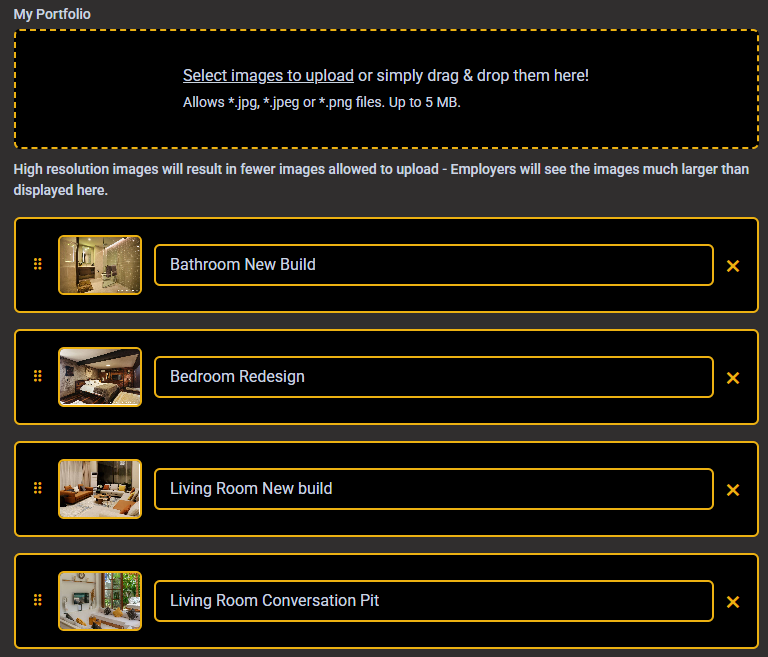
When creating or updating your profile you will be presented with an opportunity to upload images for your portfolio - as seen here - once uploaded you can rearrange the order to your liking:
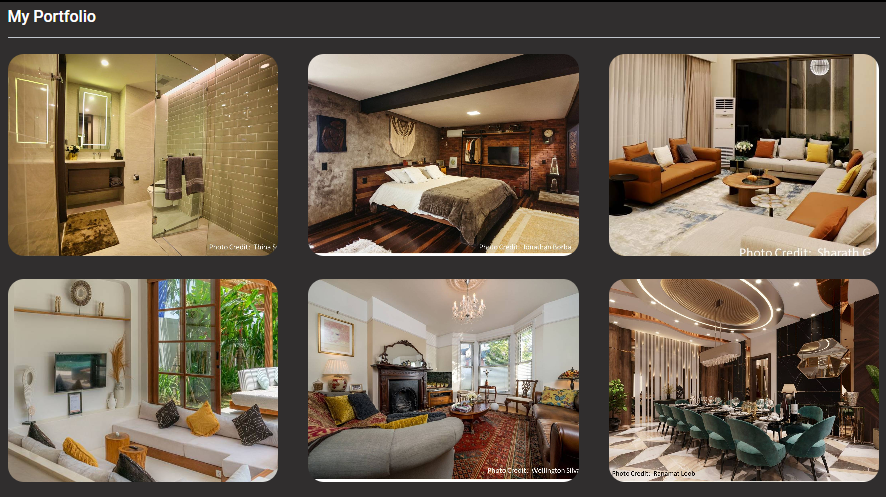
Here is what a potential employer will see when they access your profile:
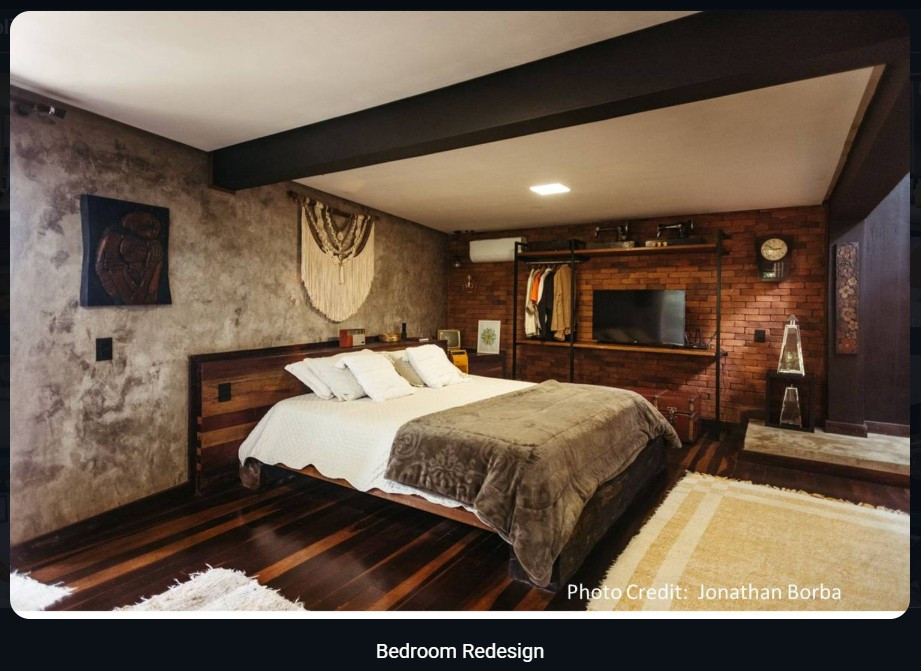
If the employer wishes to see the images larger, the individual just needs to double click on an image to see more detail:
Give Employers More Than a Resume
Interior design is a profession where seeing can be just as important as reading.
Your resume may tell an employer that you're creative.
Your portfolio can show your creativity.
Your resume may list Revit, AutoCAD, SketchUp, or other design skills.
Your portfolio can demonstrate how you've applied those skills.
Your resume may describe the projects you've worked on.
Your portfolio can bring those projects to life.
That's the real value of adding a portfolio to your professional profile.
Ready to Put Your Work in Front of Employers?
If you're an interior designer, architectural designer, interior design student, recent graduate, or other design professional looking for your next opportunity, take a few minutes to look at your current resume and portfolio.
Ask yourself:
Does my resume tell employers what I can do?
Does my portfolio show them what I can do?
Do the two work together to tell my professional story?
If the answer is yes, you're giving employers a much more complete picture of you as a designer.
And if your portfolio isn't currently part of your InteriorDesignCareers.co profile, now is a great time to add it.
Your resume tells your story. Your portfolio shows it.
Build your profile. Upload your portfolio. Let your work speak for itself.
InteriorDesignCareers.co — Connecting Talent with Opportunities