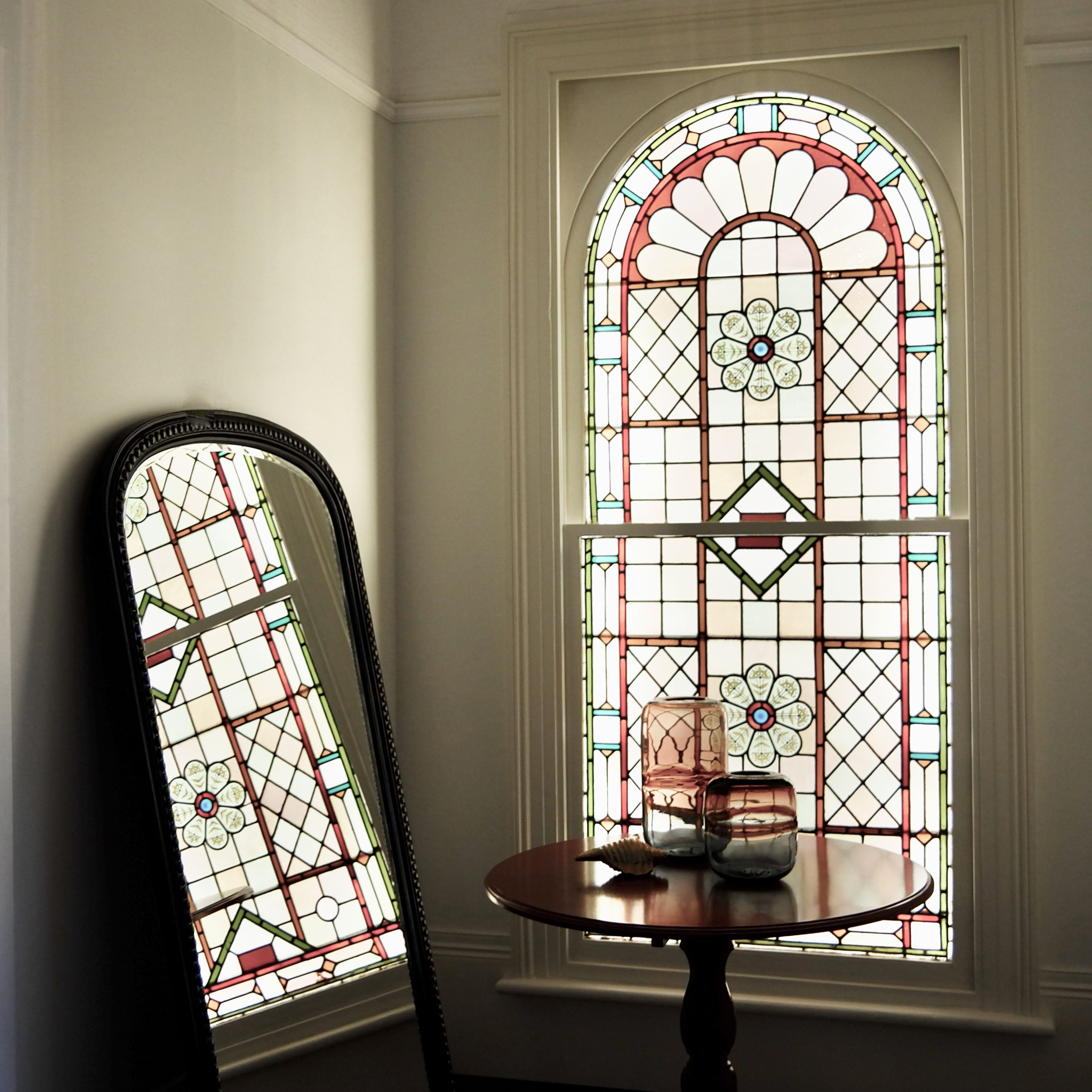
Photo Credit - Kate Branch (Pexels.com)
Who Saves the Pieces: The Art of Architectural Salvage
The Art of the Find: Bringing Architectural Salvage Into Interior Design
For Interior Designers it’s all about making a space feel special. One possible way to achieve that feeling could be with pieces of the past finding a new life in a new space.
Imagine walking through a building or home scheduled for demolition. You are left confused as today is the last day before demolition and yet you see a beautiful set of carved doors, a marble mantel, an antique light fixture and kitchen drawers with hardware that you’ve been searching for, all in place scheduled to go down without a fight.
Where some people (certainly not Interior Designers) have walked past these items without noticing them, you see endless possibilities.
Architectural salvage is about recognizing potential and that is exactly the skill interior designers bring to the table. They’re imagining the object’s next story.

Photo Credit - Tugce Turan (pexels.com)
A (Very) Short History of Saving the Pieces
One of our earliest and most fascinating precedents is the Roman practice scholars call spolia.
The Latin word spolium originally referred to booty or something stripped from a defeated enemy. In architectural history, spolia came to describe architectural elements taken from an earlier building and incorporated into a later one.
Columns, capitals, marble slabs, inscriptions, decorative sculpture, and other pieces were reused in new construction.
And this wasn't necessarily because someone thought, “Let's save this historic building material.” The reasons could be practical, economic, political, religious, or symbolic.
A later building incorporating pieces from an earlier, prestigious structure could quite literally inherit some of its authority.
In more modern time, reuse or repurposing was practiced for practical or economical purpose. In the past, families – both wealthy and not – kept their furniture and other practical items – especially kitchen and linens - in good condition as they were replaced to pass along to their children and grandchildren, until they could purchase their own.
Design Lesson: Sometimes a valuable piece is valuable precisely because it had already belonged somewhere or to someone important.
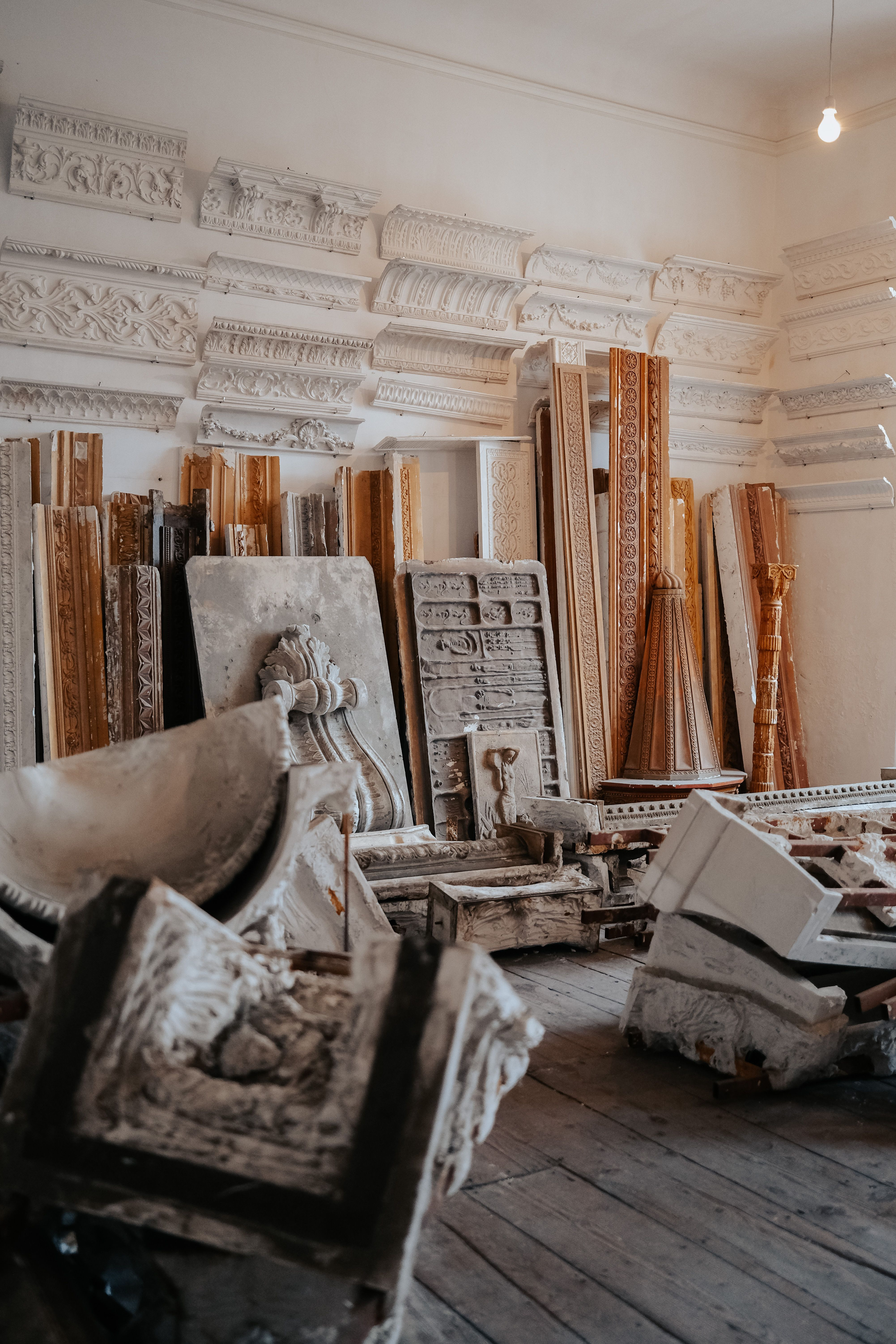
Photo Credit - Hatice Baran (pexels.com)
Where Does Architectural Storage Actually Come From?
Interior Designers have a plethora of options for finding special pieces.
There may be an architectural salvage dealer in your area. They know their stuff and might have acquired pieces from old homes, commercial buildings, churches, schools, industrial buildings, old theaters, farms and barns, renovations, and demolition projects.
There are also dealers specializing in reclaimed wood, antique hardware, architectural lighting, stone, vintage plumbing fixtures, antique doors, industrial elements, historic tiles, millwork, decorative elements, etc.
Of course, there are also antique shops, estate sales and garage sales.
If you are new to bringing architectural pieces into your designs, you might strike up a conversation with a dealer to start your education.
Once you feel you have your architectural storage foundation, you could journey out on your own to continue your education.
These are not mutually exclusive paths. You can participate in either direction or at the same time.
Another option is a deconstruction company. These companies carefully take a building apart with reuse in mind and differ from their better known counterpart, demolition companies, which generally destroy a building along with everything inside.
Design Lesson: Searching for Items. Expand your search to include the material, object, or story you want to find, along with the term “architectural salvage.”
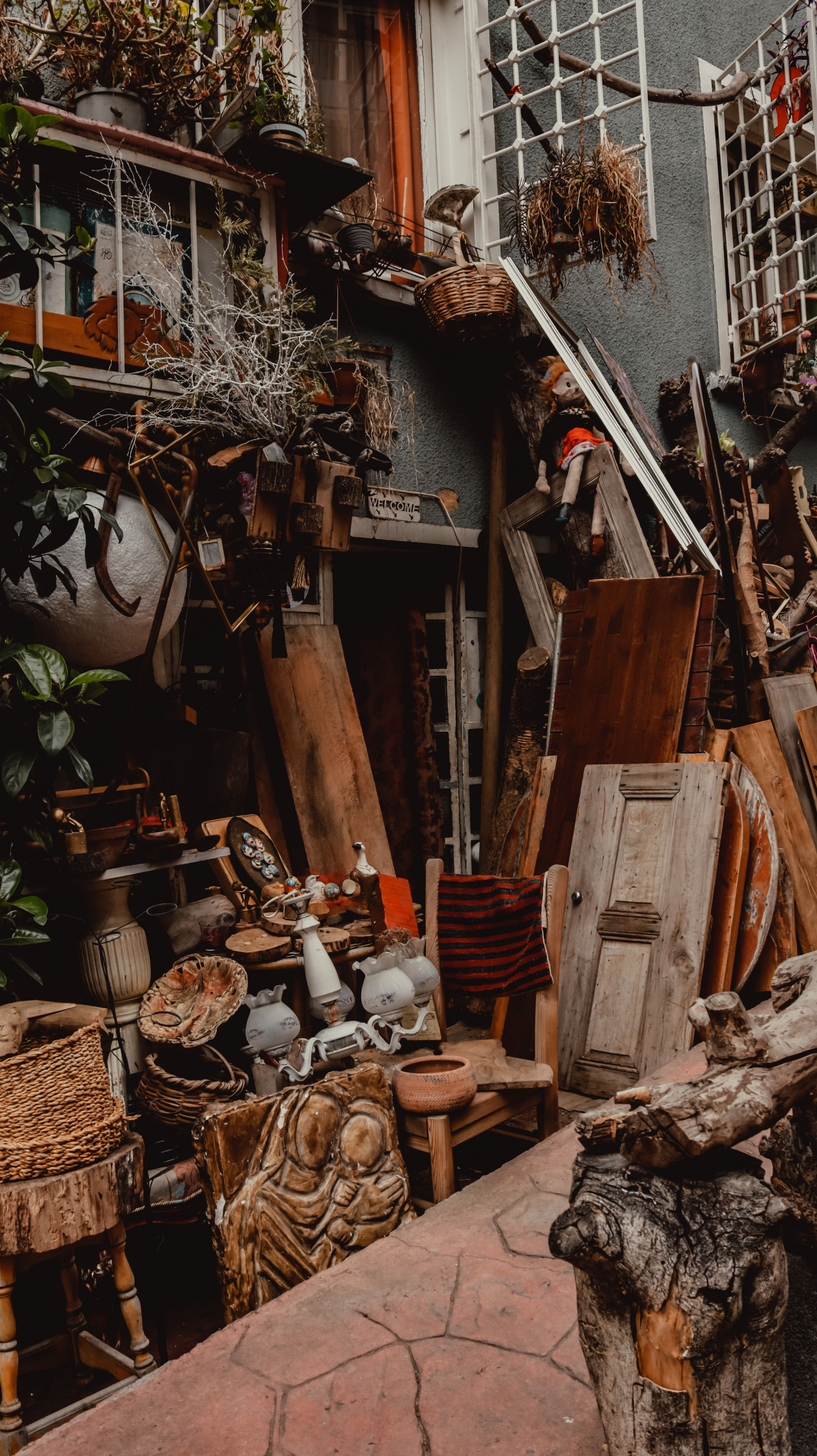
Photo Credit - Lamia Meryem Paksu (pexels.com)
What Can an Interior Designer Find?
Architectural Elements
Doors, windows, shutters, stair parts, columns, beams, mantels, paneling, wainscoting, and millwork.
Surfaces
Reclaimed wood flooring, antique tile, brick, stone, marble, slate and other materials.
Hardware and Details
Knobs, pulls, hinges, escutcheons, brackets, grilles, registers and decorative ironwork.
Lighting
Historic fixtures, industrial lights, sconces, lanterns, and unusual fixtures that can become real focal points.
Objects with Architectural DNA
Signs, fragments, screens, gates, room dividers, decorative panels, and other elements that might have had a completely different purpose originally.
A door can become a headboard.
A window can become a room divider.
A piece of architectural millwork can become furniture.
A section of railing can become sculpture.
An old industrial component can become the inspiration for an entirely new installation.
This is where the interior designer enters the story.
Design Lesson: Items can become something new. A salvage element does not have to return to its original purpose.

Photo Credit - zeynep aldan (pexels.com)
The Designer’s Eye: Seeing Beyond the Original Purpose
Interior Designers are instinctively pulled toward an idea or an item. Recognize it when it happens and ask yourself some questions.
Why are you drawn to this item for this idea?
What/how does it make you feel?
Can you imagine this item in a space you’re working on?
What elements would coordinate with it?
Are there elements of craftsmanship that you can build upon or highlight?
Design Lesson: A salvaged object has already experienced its first act. It’s up to you to determine if it will have a second?
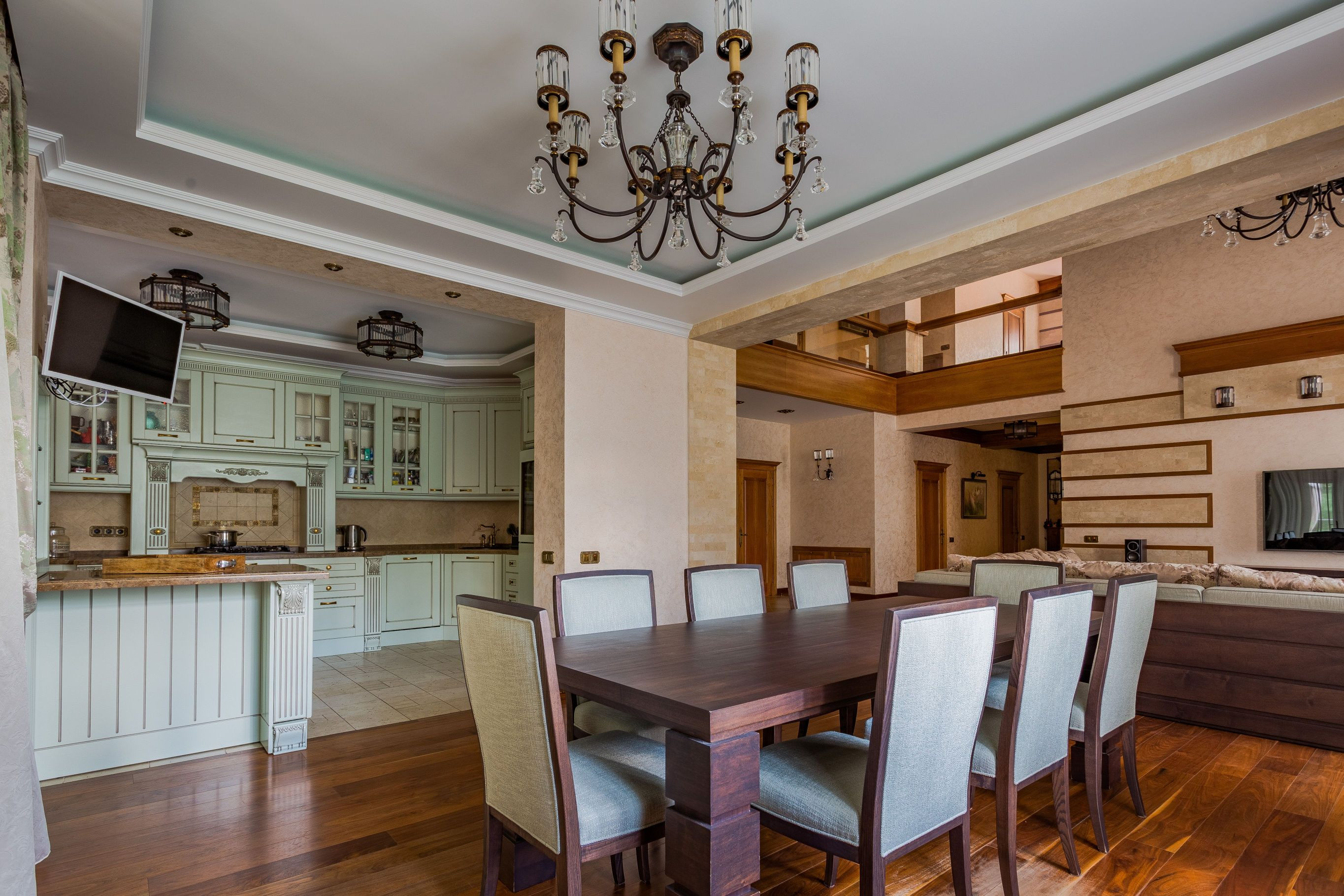
Photo Credit - Алан Албегов (pexels.com)
How to Incorporate Salvage without Making a Room Feel “Old”.
You may be concerned – as might your clients – that incorporating an old element may date a space or make it feel old. Unless you are creating a historically themed interior or restoring a historic space, this is not necessarily true.
This is your chance to showcase your skills. Some of the most compelling spaces may incorporate an old element with a contemporary surrounding.
A weathered reclaimed door against crisp contemporary walls.
An antique mantel in a minimalist room.
Industrial windows paired with soft upholstery.
Historic hardware on a completely new cabinet.
Reclaimed wood alongside polished stone.
An antique light fixture above a contemporary dining table.
The contrast allows both elements to become more visible.
Design Lesson: The power of a reclaimed piece often comes from what surrounds it.
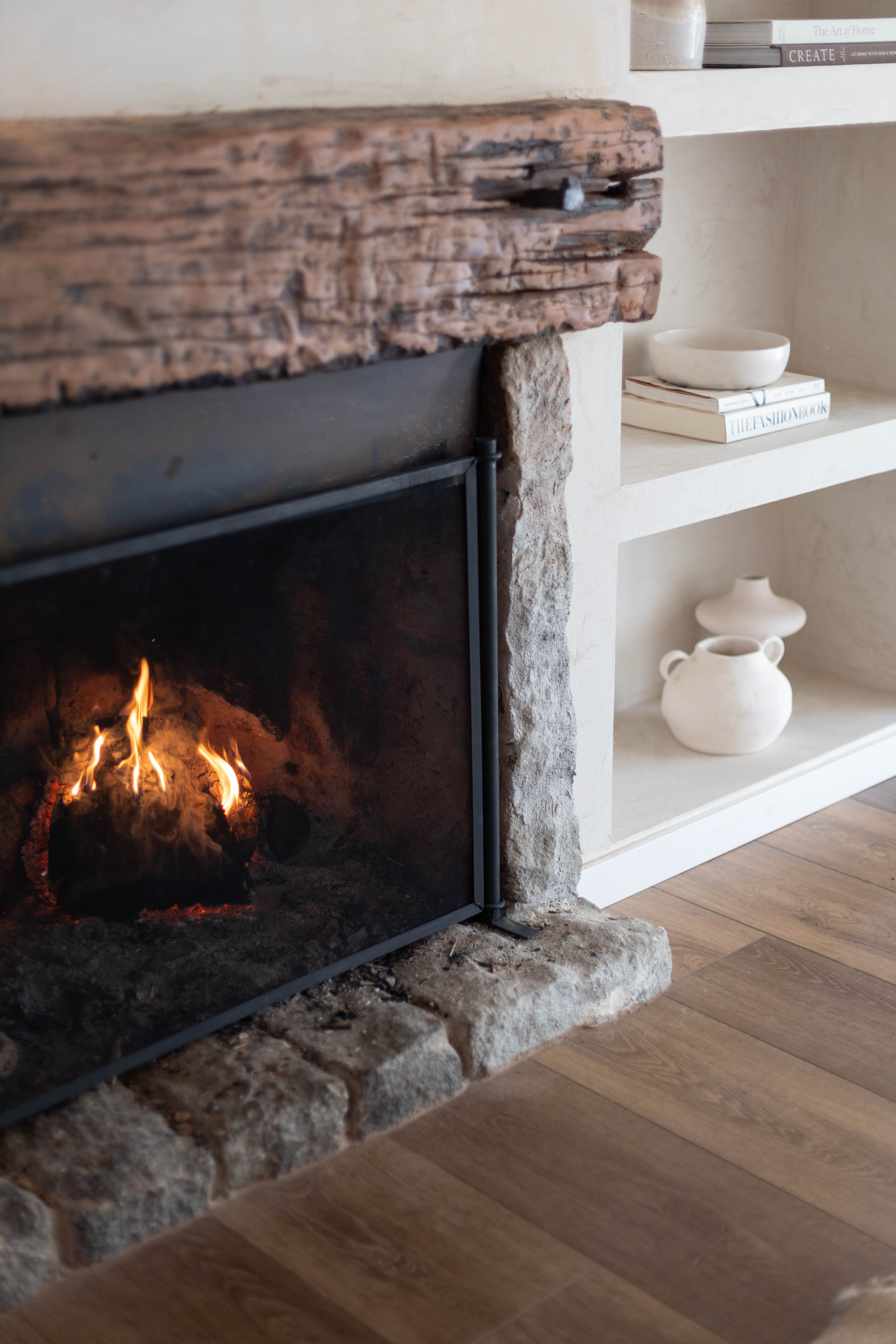
Photo Credit - Vale Bocchi (pexels.com)
The “One Extraordinary Thing” Approach
Designers don't need an entire room of salvaged materials.
One remarkable element can completely change the character of a space.
A carved mantel.
A pair of doors.
A vintage chandelier.
A fragment of stained glass.
A reclaimed beam.
A piece of antique millwork.
Design Lesson: Salvage can be the accent rather than the theme.
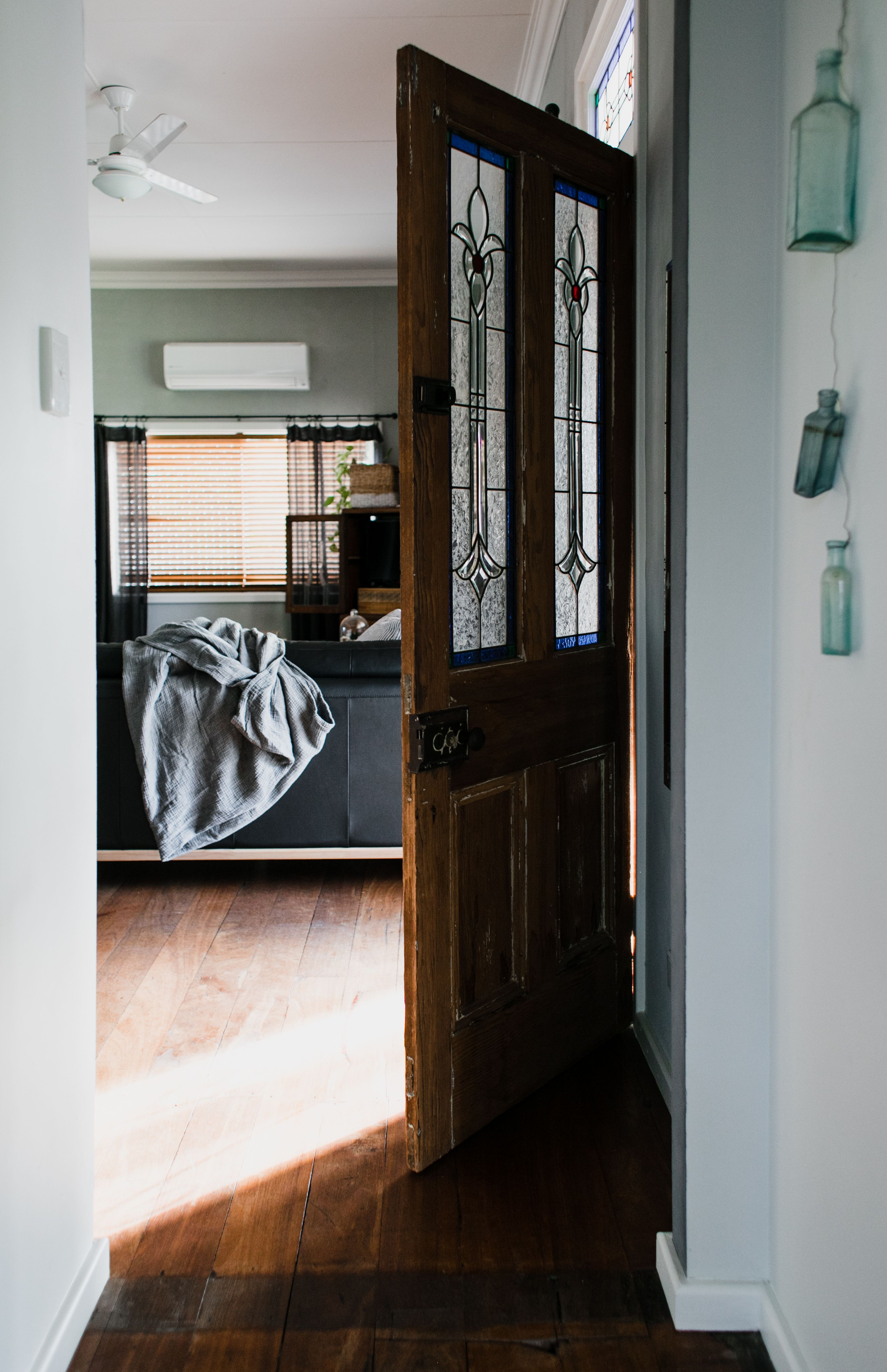
Photo Credit - Rachel Claire (pexels.com)
What to Look for When You're Buying Salvage
Take the time to evaluate the item you are thinking of acquiring. Not every item will be worthy of your time and money.
Condition. Is the deterioration beautiful patina—or structural damage?
Dimensions. Can the piece actually work in the proposed space?
Material. What is it made from, and how will that material behave in its new application?
Provenance. Is there information about where it came from?
Authenticity. Is it genuinely old, or has it been made to look old?
Alterations. Has it already been modified? This is especially important when purchasing electrical items.
Lead paint and hazardous materials. Particularly important with older painted surfaces and building components.
Pests and biological damage. Especially reclaimed wood.
Code considerations. Particularly relevant for doors, windows, stairs, railings and lighting.
Adaptability. Can the piece safely and appropriately become what you want it to become?
Design Lesson: Rational decision making overrules an emotional connection to the object.
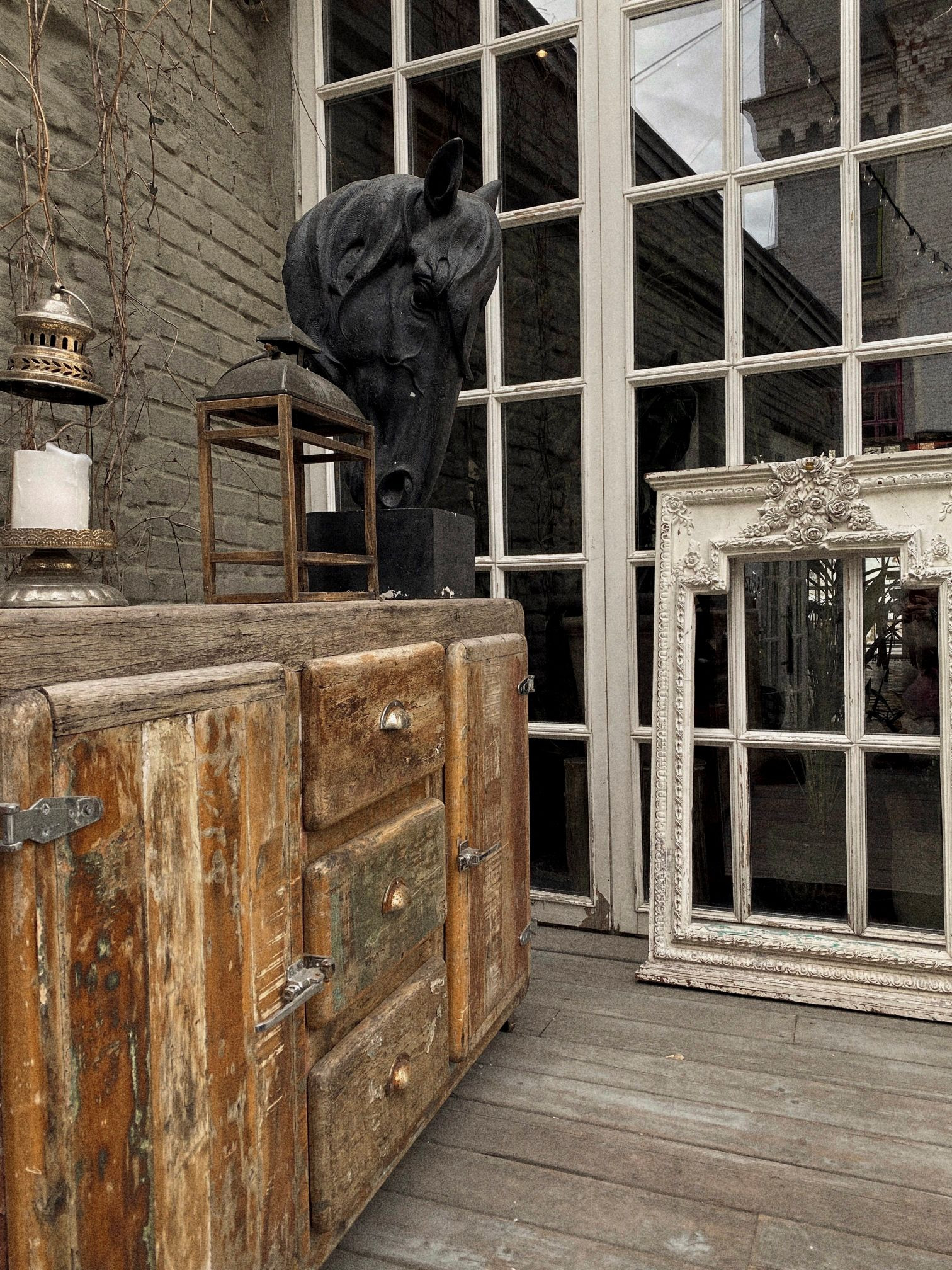
Photo Credit - Ника Алексеева (pexels.com)
The Practical Reality: Salvage Isn't Always Plug-and-Play
A beautiful old door may need to be repaired.
An antique light fixture may need rewiring.
Old windows may not meet current performance requirements.
A salvaged mantel may need stabilization.
Reclaimed wood may need cleaning, milling or finishing.
Historic materials may need testing.
And something that looks inexpensive at the salvage yard can become considerably more expensive once restoration and adaptation are included.
That isn't necessarily a reason not to use it.
Design Lesson: As an interior designer it is your responsibility to price the story as well as the object.
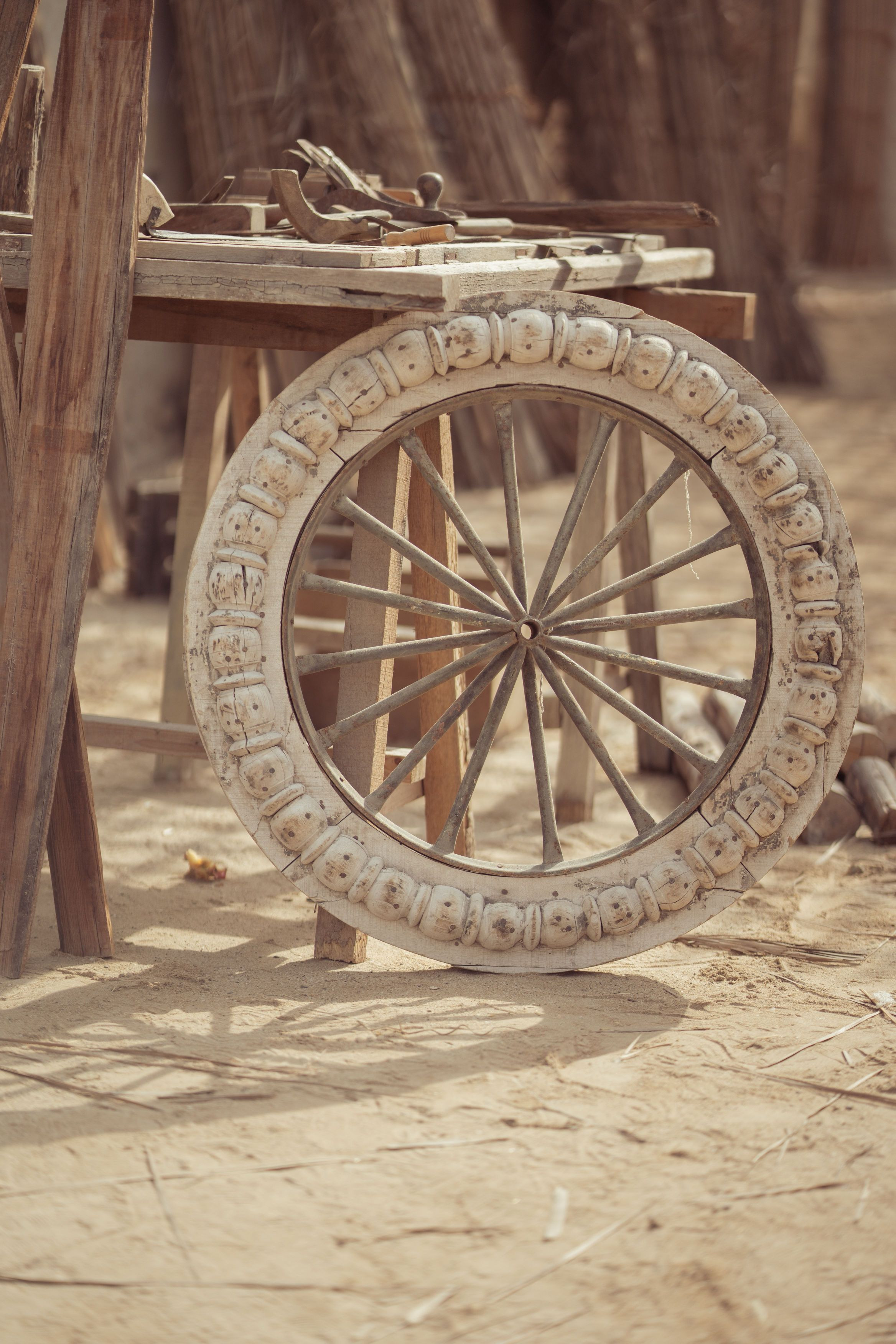
Photo Credit - Denys Gromov (pexels.com)
Working With Salvage Dealers: Build the Relationship
It’s important to get to your local dealers.
Tell them what kinds of projects you work on.
Let them know the materials you frequently seek.
Ask whether they offer trade pricing.
Find out whether they'll contact you when something specific arrives.
Ask about upcoming building deconstruction projects.
Visit periodically.
Because the perfect piece may not be sitting on the showroom floor when you need it.
A dealer who understands your aesthetic may remember you when something extraordinary comes through the door.
Design Lesson: Become known as the designer who can see possibilities.

Photo Credit - Sóc Năng Động (pexels.com)
Designing With a Story
A salvaged piece carries evidence of another life.
Scratches.
Wear.
Handmade irregularities.
Patina.
Repair.
Scale.
Craftsmanship.
Sometimes provenance.
Those things can give a room something that new materials cannot easily manufacture: a sense of accumulated time.
And the designer doesn't have to know every detail of an object's history for it to contribute that feeling.
Design Lesson: A piece can simply suggest that it has been somewhere before and had another life.
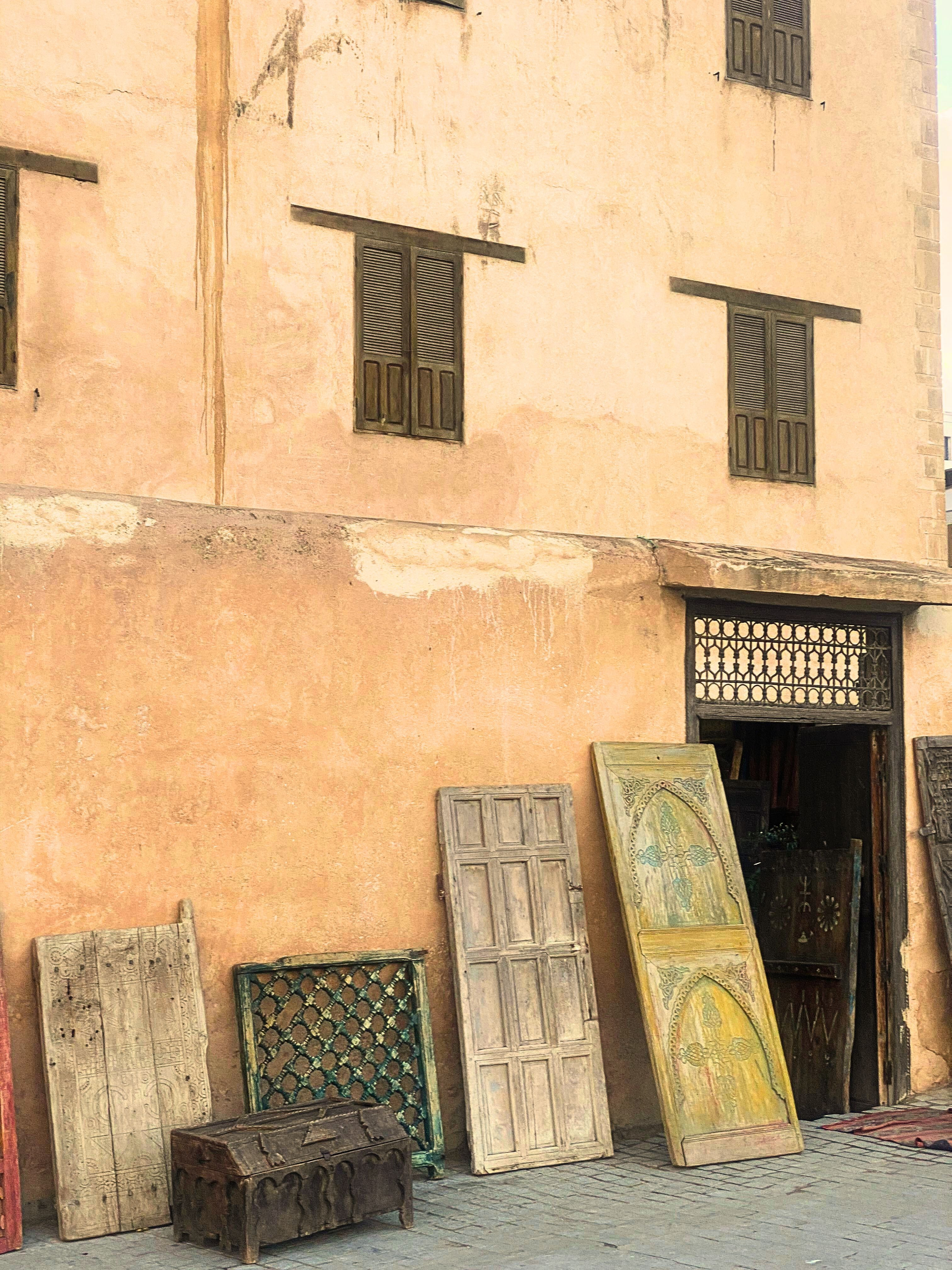
Photo Credit - Sofia Err (pexels.com)
Salvage as Sustainable Design—With a Footnote
Reusing an existing architectural element can keep materials out of the waste stream and preserve embodied craftsmanship and resources.
But "reclaimed" shouldn't automatically be treated as synonymous with environmentally superior.
Transportation, restoration, cleaning, processing, finishes and adaptation all have environmental impacts.
Design Lesson: Salvage is one component of a broader reuse strategy.
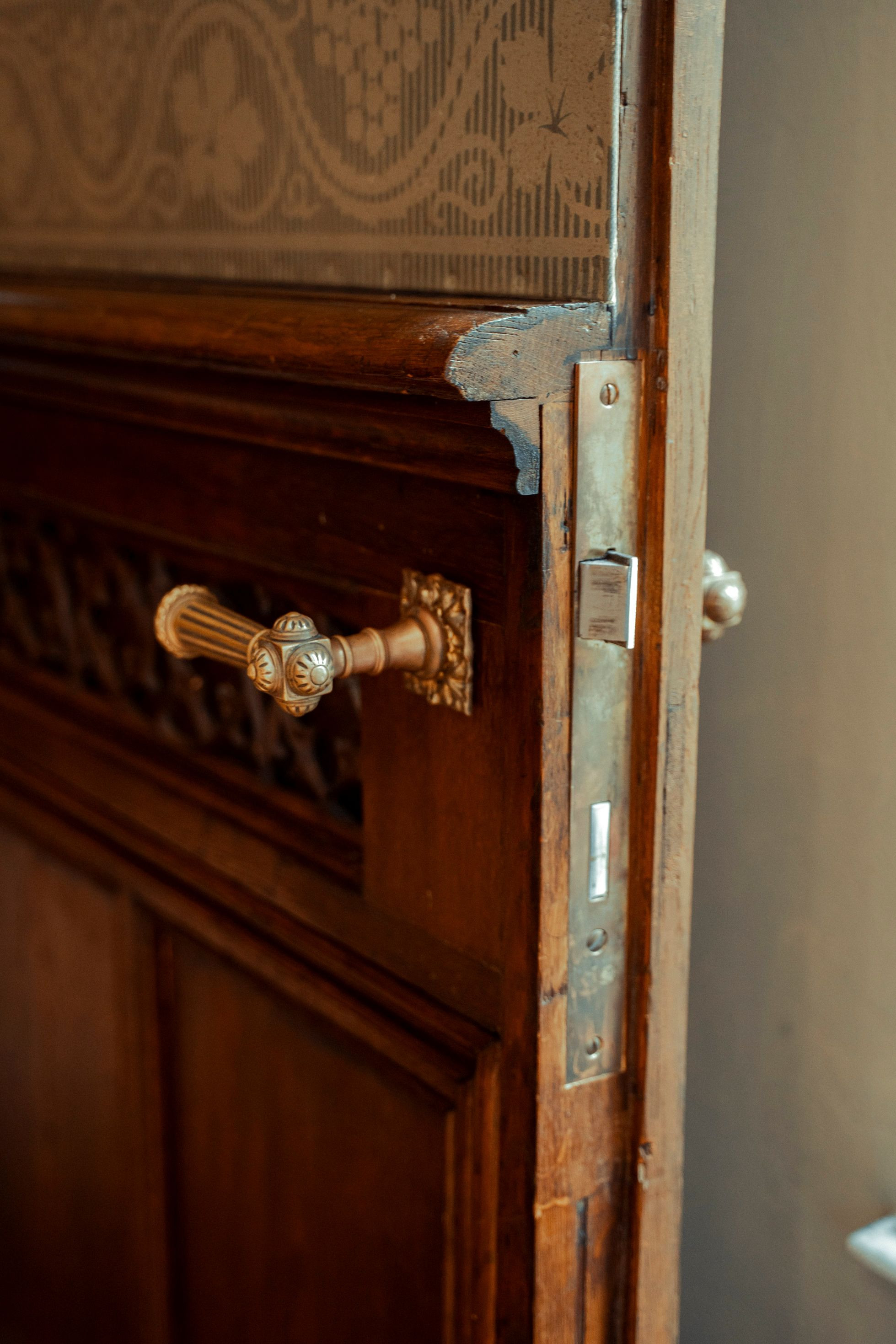
Photo Credit - Radwan Menzer (pexels.com)
The Interior Designer as Matchmaker
The salvager saves the piece.
The dealer gives it a place to be discovered.
The designer gives it another possibility.
And the client ultimately gives it a new home.
That makes architectural salvage less about decorating with old things and more about connecting pieces of the past with the needs of the present.
Somewhere, someone is carefully removing a door from a building that will soon disappear. Someone else will carry it to a salvage yard. A designer will eventually walk past it, stop, look twice—and imagine something no one involved in the door's original life could have anticipated.
Maybe that's the real art of architectural salvage: not saving something exactly as it was, but recognizing enough of its potential to imagine what it could become.