The Newel Post: Where Function Meets Experience
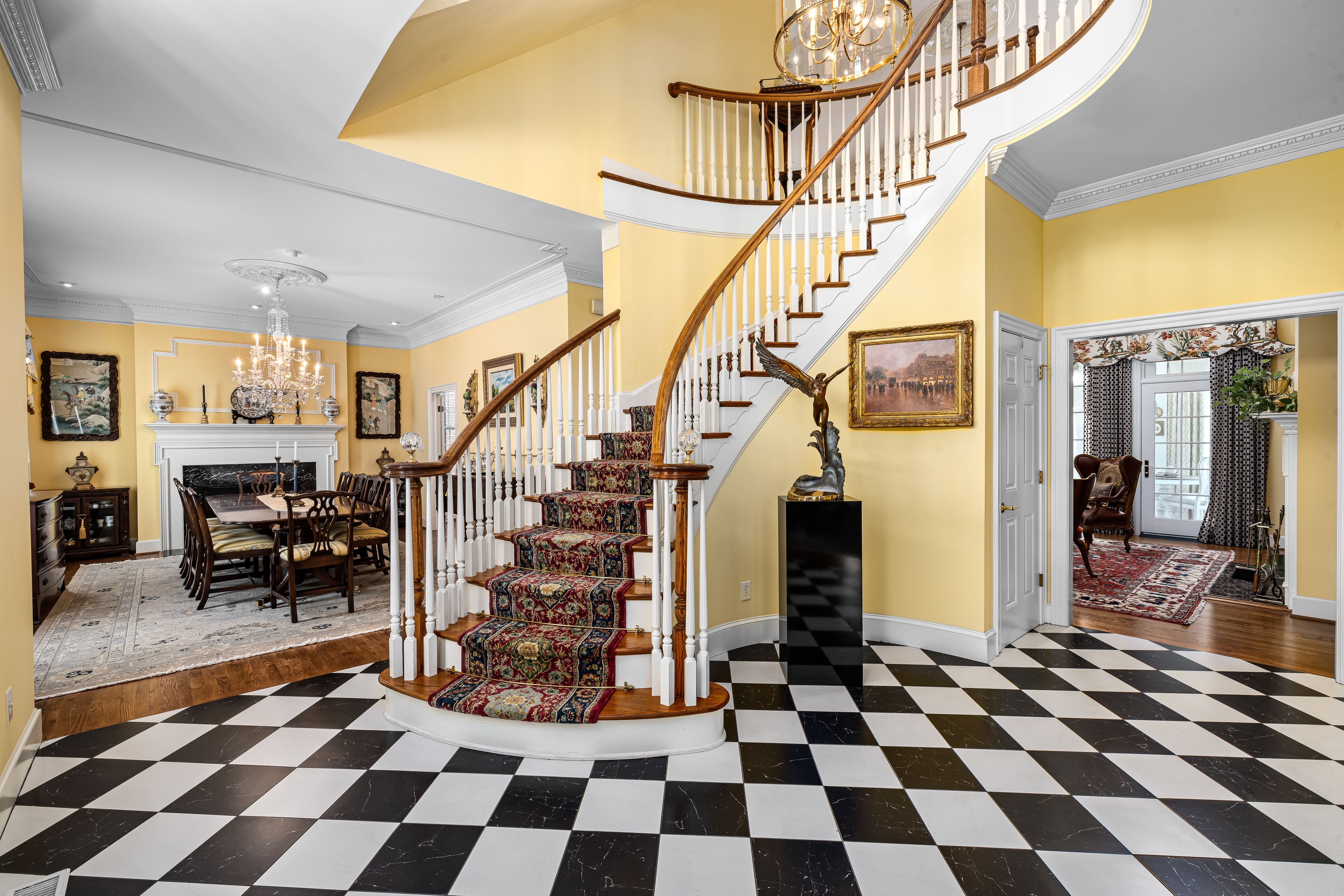
Photo Credit: Curtis Adams (pexels.com)
There are architectural details we notice immediately and then there are the details we pass by every day without really noticing them.
Newel posts fall into the latter category. Until of course, they become a centerpiece of entertaining decorated for the holidays in festive style with garland, lights, and decorations lovingly placed along the staircase.
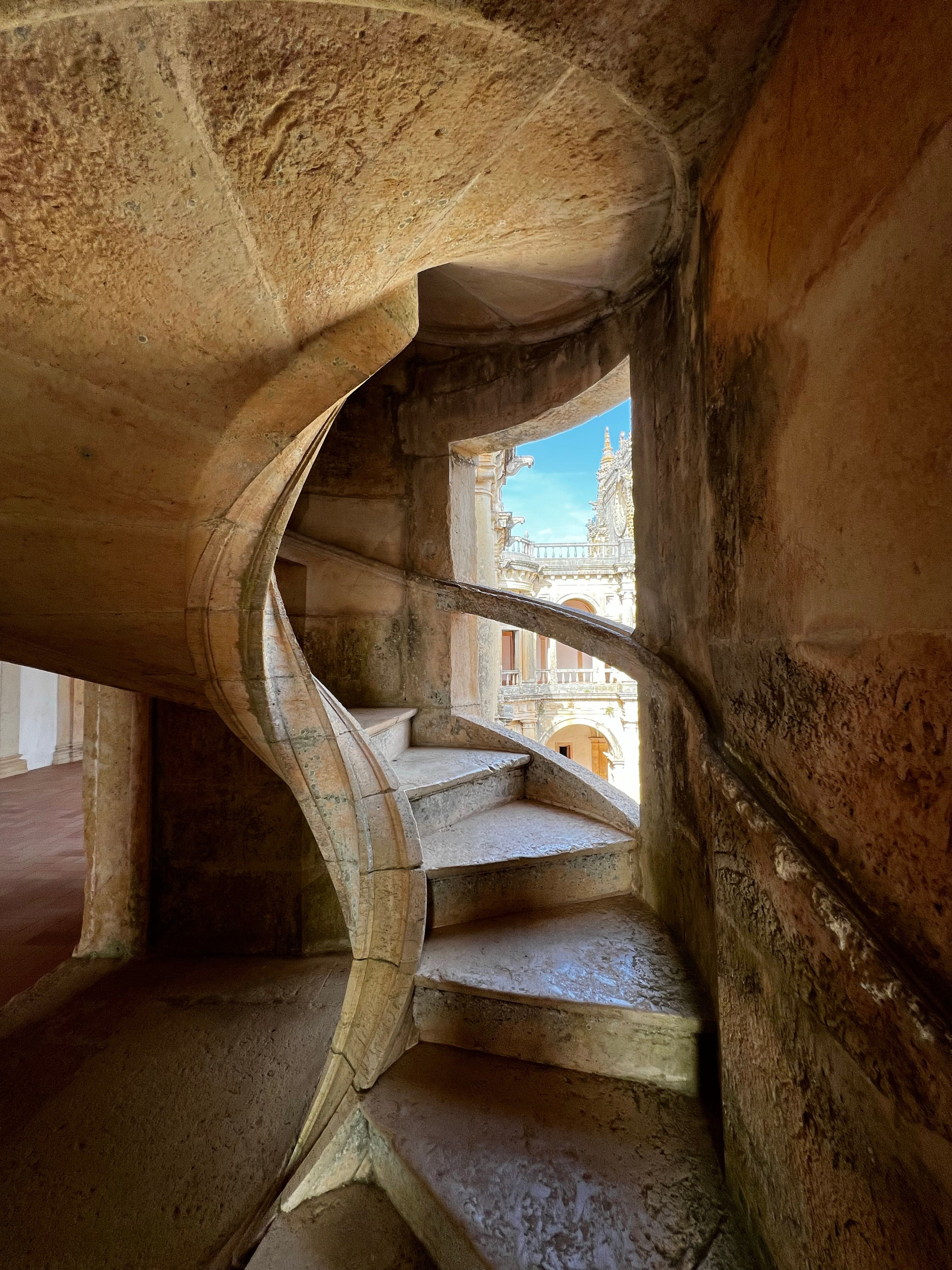
Photo Credit: Pexels User (pexels.com)
A Post With a Long History
According to etmyonline.com, the word newel possibly originated around the mid-14th century from the words “nouel, or nowel , [a]pillar from which steps of a winding stair radiate, stone cut to form a step and a section of the central pillar of a spiral stair.”
In medieval architecture, particularly in towers and fortified buildings, staircases tended to be steep, narrow and winding. A substantial central post provide a bit of security by forming the core of a spiral or winding stair while the surrounding steps and handrails were organized around it.
The newel, apparently, was never mean to be a decoration. However, creative people have a way of seeing differently and finding potential in everything. As staircases became more prominent features through the centuries, their components became more than an architecture feature and increasingly expressive. Designers realized staircases could become ceremonial elements of the house – places where architecture, craftsmanship, and hierarchy intersected.
Design Lesson: Look for the Moment of Transition
The historical newel teaches us to pay attention to places where people move from one experience to another.
A staircase is an obvious transition, but designers can apply the same principle throughout an interior. A change in ceiling height, flooring, lighting, material or even furniture arrangement can announce that we are moving from one kind of experience to another.
Rather than allowing every transition to disappear, consider whether one might deserve emphasis.
Where does the experience of this room begin? Where does it change? And could an architectural detail help us feel that transition?
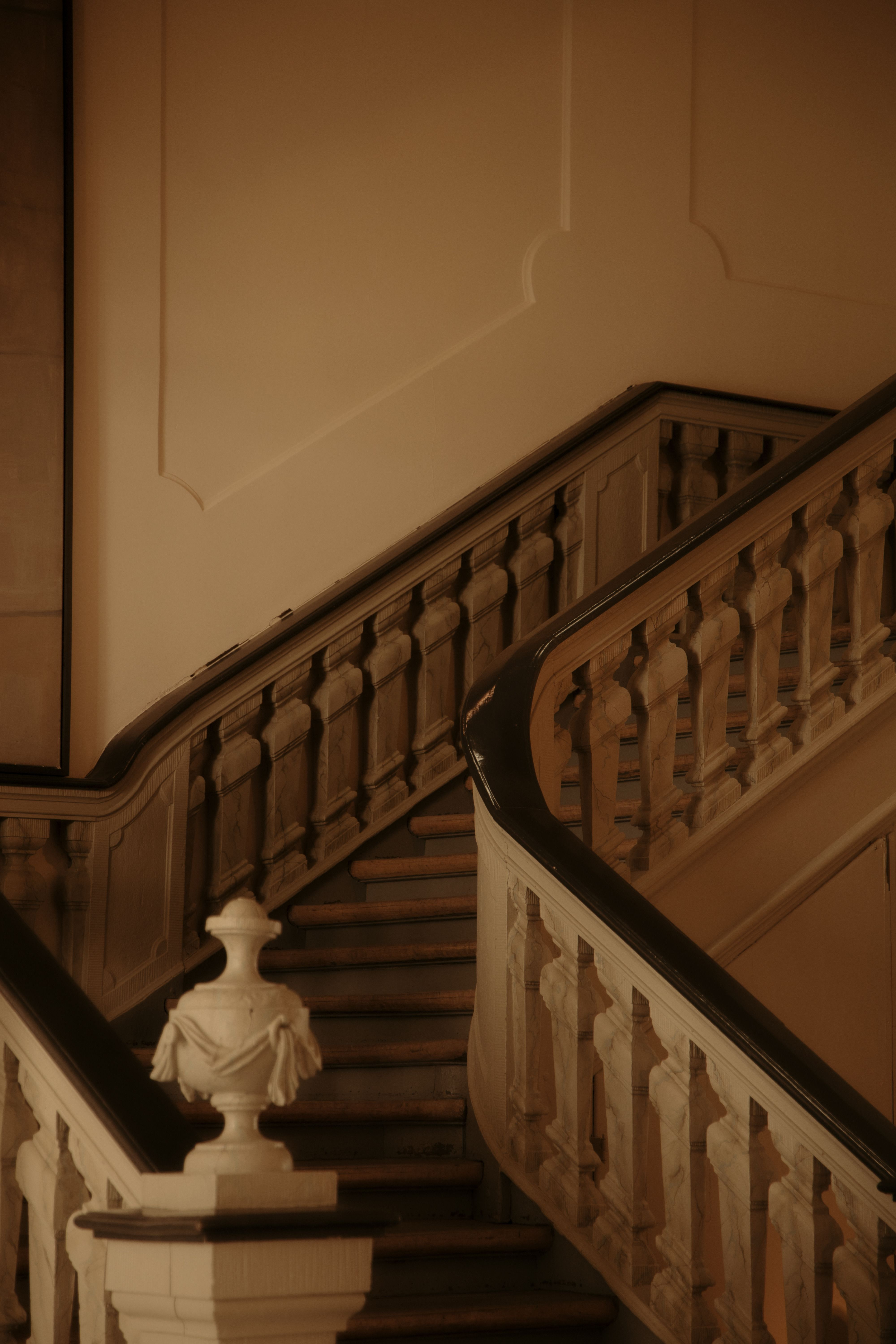
Photo Credit: Pegah Sharifi (pexels.com)
Georgian and Federal Elegance
By the eighteenth century, staircases in sophisticated residences were often carefully integrated into the architecture of the entrance hall.
In Georgian and Federal interiors, restraint and proportion were prized. Newels might be relatively simple, but their shape, scale, and relationship to the balusters and handrail mattered enormously.
Turned wood was particularly useful because craftsmen could create subtle variations in profile—rings, collars, bulbs, tapers, and other forms that gave a seemingly simple post a sense of rhythm.

Photo Credit: Duy Le Duc (pexels.com)
And then there were the caps.
The top of a newel provided another small surface on which craftsmanship could speak.
One of the most recognizable decorative motifs of the eighteenth century was the pineapple. Because pineapples were exotic and difficult to obtain in Europe and colonial America, they became associated with hospitality, prosperity, and welcome.
A pineapple finial on a newel therefore carried more meaning than its decorative appearance might suggest.
At the entrance to a house, it could quite literally be an architectural gesture of welcome.
Design Lesson: Small Details Can Carry Big Ideas
A newel cap is a reminder that symbolism doesn't require a monumental gesture.
A small detail can communicate hospitality, heritage, craftsmanship, or personality.
Today's designers can approach hardware, lighting, millwork, stair components, and other seemingly minor details in much the same way.
Instead of asking only, What looks good here?
Ask:
What might this detail say?
A material might communicate warmth. A motif might reference a client's heritage. A handcrafted element might signal permanence in an otherwise contemporary interior.
The smallest details sometimes give a room its most personal voice.
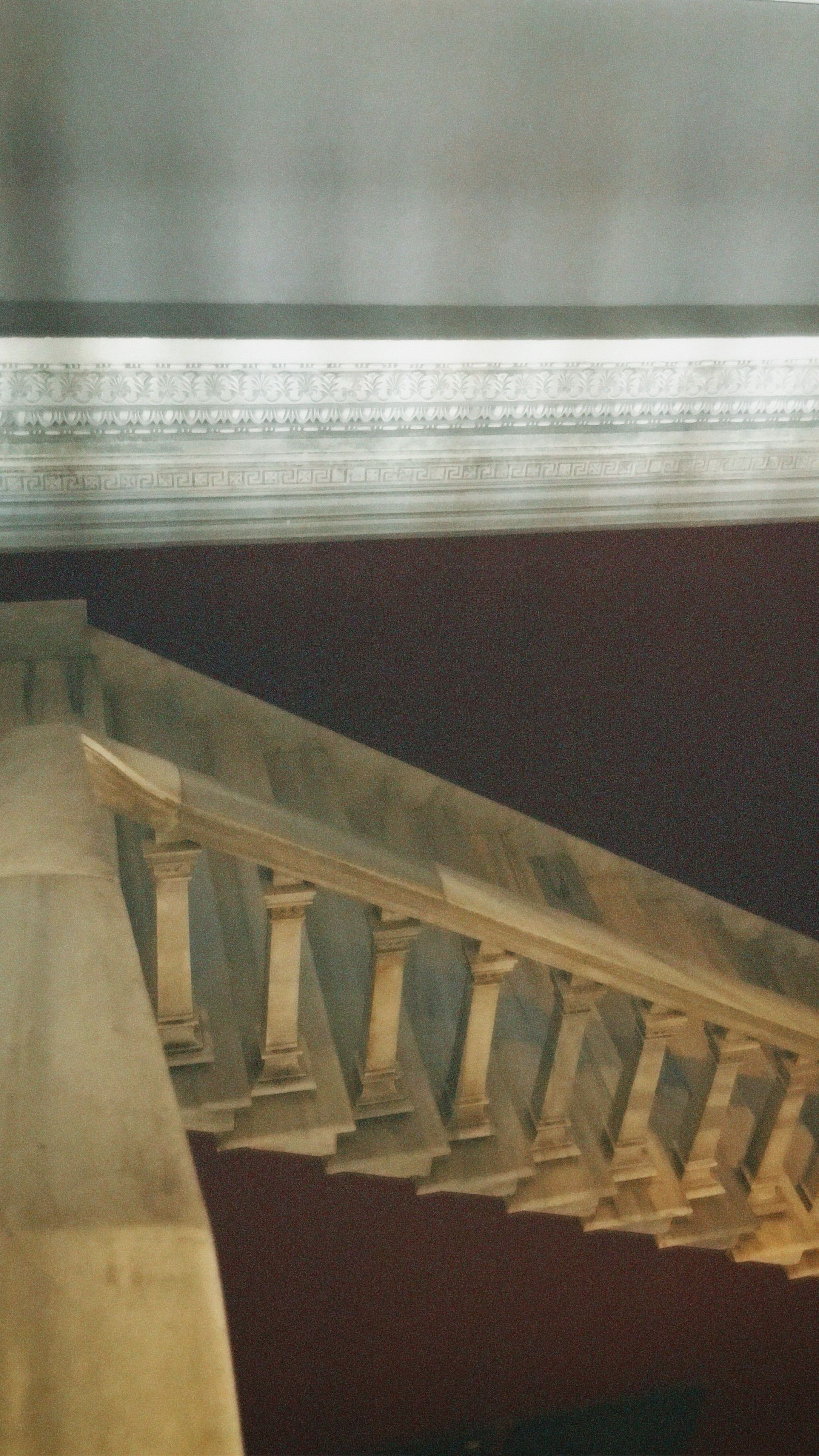
Photo Credit: merve katmerlikaya (pexels.com)
Victorian Abundance
If Georgian designers whispered, Victorian designers were often happy to speak at full volume.
The nineteenth century brought an extraordinary range of newel-post designs.
Advances in manufacturing and woodworking technology made elaborate turned components more accessible. At the same time, Victorian architecture embraced ornament, historical references, and an enthusiasm for craftsmanship.
Newels could become massive, elaborate, and highly decorative.
Carved oak might be combined with turned components. Cast iron introduced another material vocabulary. Newels could feature fluting, carving, geometric patterns, foliage, finials, and other ornamental details.
The staircase became a stage.
And the newel became one of its principal actors.
In many Victorian homes, the newel is so distinctive that it can immediately tell us something about the character of the interior before we have examined anything else.
Design Lesson: Don't Be Afraid of Personality
Contemporary interiors sometimes become so carefully edited that individual architectural elements lose their ability to surprise us.
The Victorian newel offers an opposing lesson: a functional element can have personality.
That doesn't mean today's designers need to recreate Victorian exuberance.
It might mean introducing one unexpected carved element into an otherwise restrained interior.
Or using a highly tactile piece of timber.
Or allowing a staircase to have a little more visual presence than the surrounding architecture.
The goal is not ornament for ornament's sake.
It is to give the space something memorable.
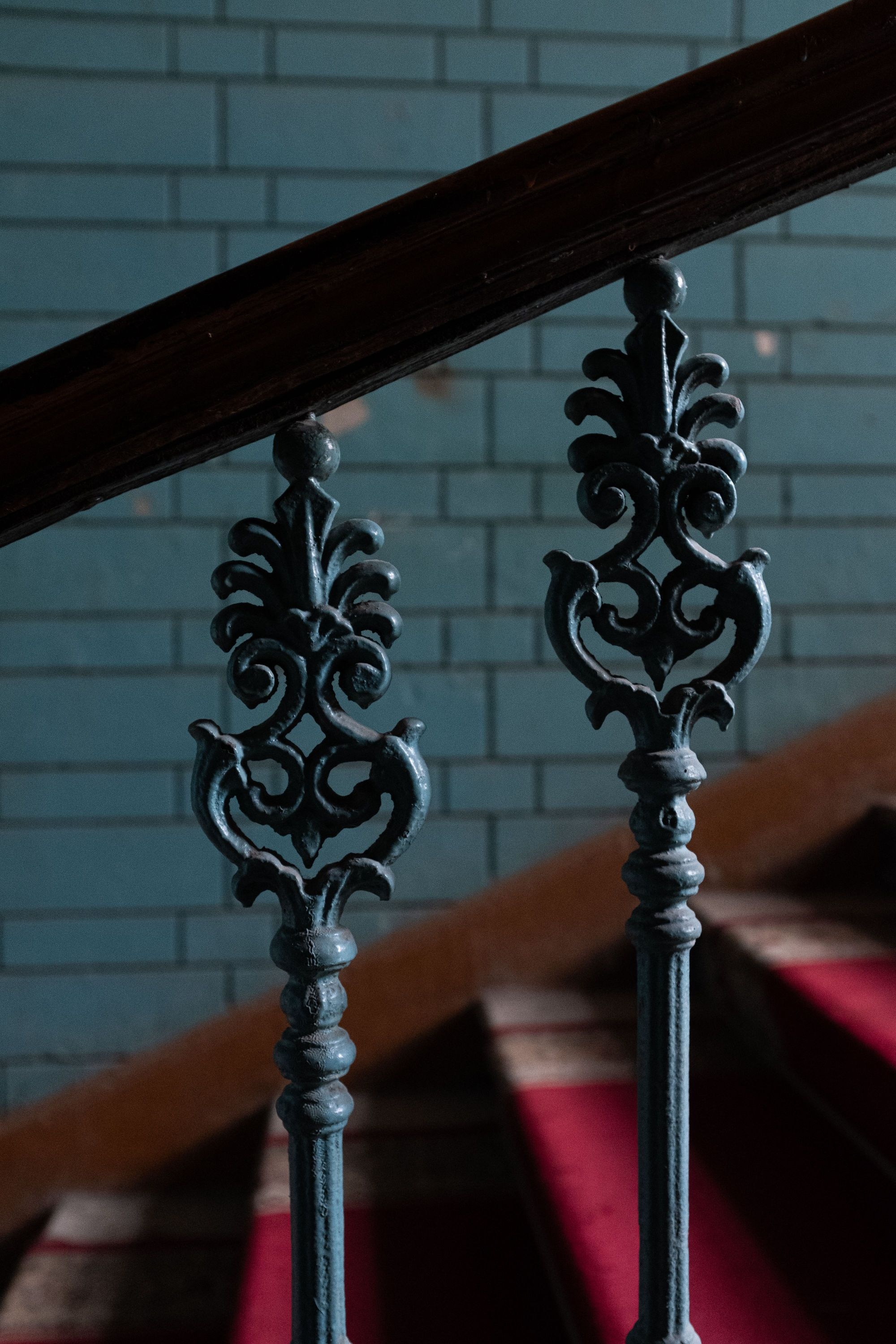
Photo Credit: cottonbro studio (pexels.com)
From Ornament to Simplicity
The twentieth century brought a different attitude.
Modernism challenged the idea that every functional element needed to be decorated. Ornament was increasingly questioned, and the visual language of architecture moved toward simplicity, abstraction, and clarity.
Newels did not disappear.
But they changed.
A newel might become a simple square post rather than an elaborate turned column. Metal and other modern materials could replace carved wood. In some contemporary staircases, the distinction between newel, railing, and architectural structure is deliberately blurred.
This evolution is worth noting because it reminds us that the newel has never had one fixed appearance.
Its essential role is functional.
Its appearance is a design decision.
And that distinction gives today's designers tremendous freedom.
Design Lesson: Separate Function From Appearance
This may be the most liberating lesson of all.
When we understand what an architectural element needs to do, we become freer to reconsider what it could look like.
A newel doesn't have to be traditionally turned wood.
It could be:
stone,
bronze,
steel,
a sculptural piece of timber,
plaster,
or another material entirely.
The question becomes less What should a newel look like? and more:
What does this project need this element to contribute?
That shift—from prescribed appearance to intentional design—is at the heart of contemporary interior design.
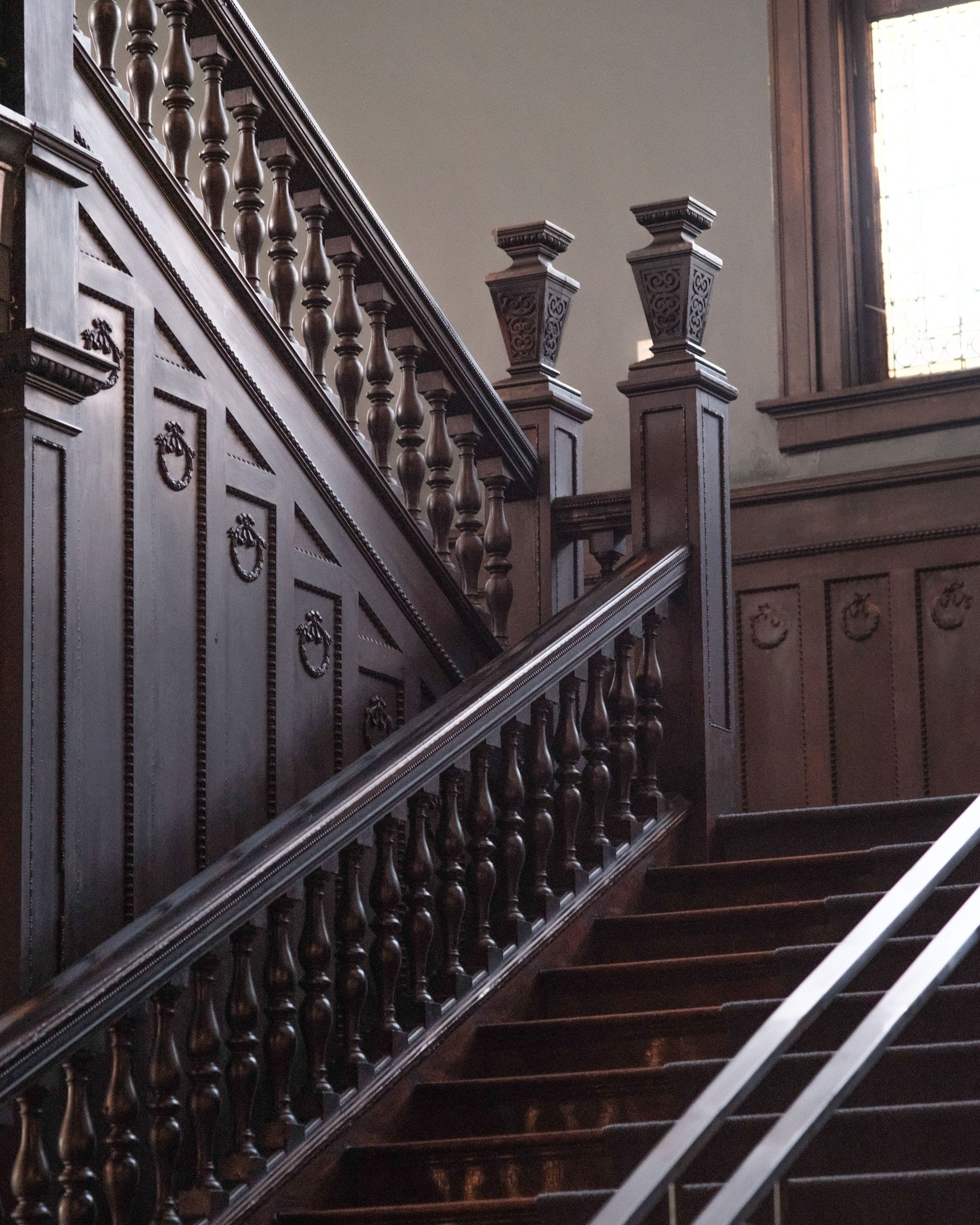
Photo Credit: Raphael Loquellano (pexels.com)
Giving the Newel a Second Act
Perhaps the most intriguing possibility is incorporating a historic or salvaged newel into a new interior.
Imagine an ornate nineteenth-century post against an otherwise restrained staircase.
The contrast can be wonderful.
Rather than attempting to make every element of a renovation appear as though it was created at the same time, allow a historic component to reveal its age.
An old newel can provide texture, craftsmanship, and a sense of continuity that is difficult to manufacture.
And perhaps more importantly, it gives an existing object a new life.
Design Lesson: Let History Participate in the Present
A historic newel doesn't necessarily belong in a historically styled room.
In fact, placing it in a contemporary setting can make its character even more apparent.
A carved Victorian post against a quiet plaster wall.
An antique oak newel paired with a minimalist railing.
A salvaged architectural element incorporated into a newly constructed staircase.
These juxtapositions create tension—and tension is often what keeps an interior from feeling predictable.
Old and new don't have to compete. They can make each other more interesting.

Photo Credit: YEŞ (pexels.com)
Think Beyond the Staircase
And perhaps this is the most interesting lesson of all.
A newel is fundamentally about transition.
It marks a place where movement begins, ends, or changes direction.
That makes its underlying design principle useful even when there is no staircase involved.
Could a substantial architectural post mark the entrance to a library?
Could paired posts frame a passage between rooms?
Could a sculptural vertical element distinguish one zone from another in an open-plan interior?
Could a contemporary interpretation of the newel create a moment of pause between spaces?
The answer may be yes.
Design Lesson: Give Transitions Meaning
We often work very hard to make interiors feel seamless.
But seamless doesn't have to mean indistinguishable.
There are moments when we want a client or guest to feel that they have entered somewhere new.
A threshold.
A destination.
A change in mood.
A moment of pause.
The newel gives us a historical example of how a relatively small architectural element can accomplish exactly that.
Transitions are part of the experience of a space. Design them accordingly.
Photo Credit: gravity cut (pexels.com)
The Architecture We Walk Past
There is something wonderfully instructive about the history of the newel post.
It began as a practical solution.
Then craftsmanship transformed it.
Architecture gave it prominence.
Culture gave some of its decorative details meaning.
And contemporary design gives us permission to reinterpret it again.
Perhaps that is why the newel deserves another look.
In a world of increasingly seamless interiors, where technology allows us to hide structure, conceal hardware, and make transitions disappear, the newel offers another possibility.
What if we allowed some of the things that make a space work to also tell us something about the space?
A staircase does not need to be monumental to be memorable.
Sometimes it only needs one extraordinary detail.
Perhaps that detail is a newel post.
And perhaps the next time we encounter one, we should stop for a moment before walking past.
After all, the most interesting pieces of architecture aren't always the ones that demand our attention.
Sometimes they are the ones that have been quietly holding everything together all along.