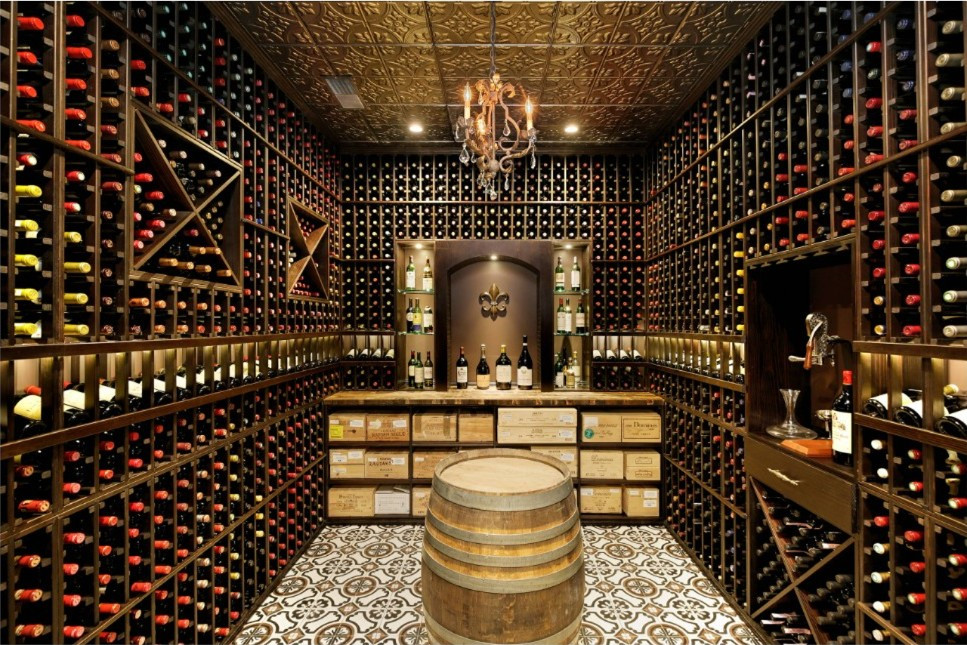
Photo credit: Houzz.com
The choosing of a bottle of wine – whether from a wine cellar, a wine vault, a wine room, or a wine closet is an opportunity for us to slow down and savor what’s to come. Are we going to share this bottle with friends? If so, what will this choice say about us – and them?
Long before the first luxury home included a climate-controlled environment people understood one simple truth…wine likes consistency.
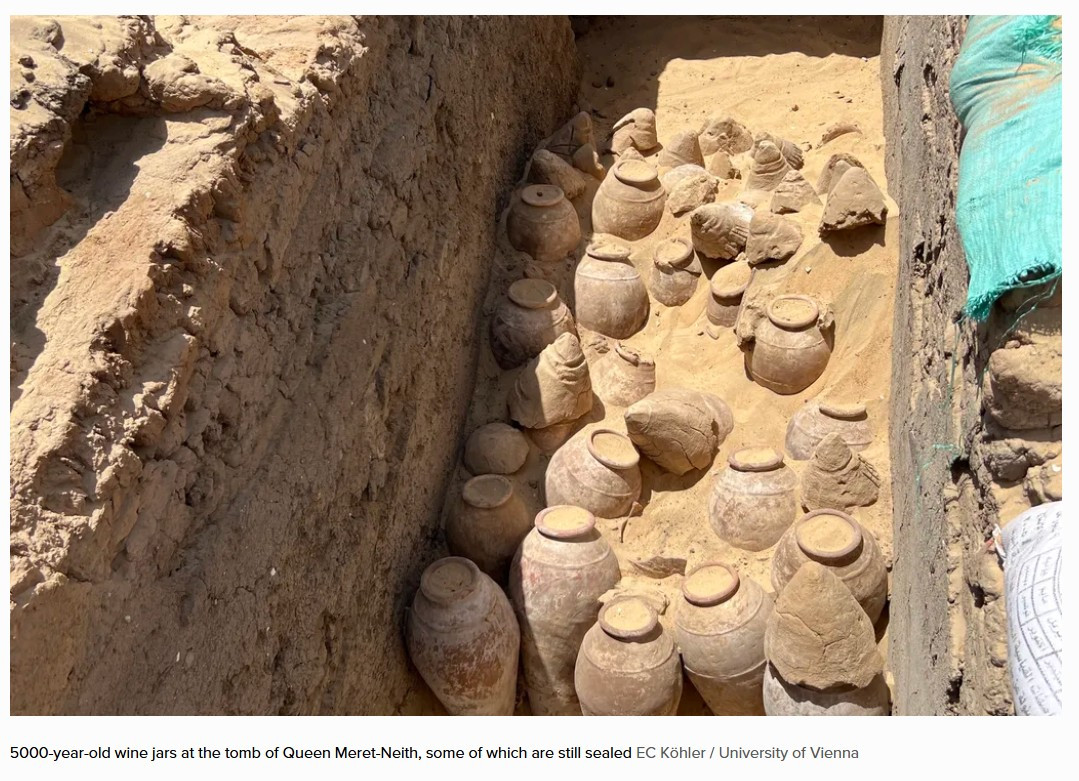
Archaeologists have found evidence of winemaking going as far back as approximately 6000 BC. Some of the oldest wineries ever discovered date back to 4100 BC in Armenia.
These early wineries look remarkably like modern day wine cellars with the large clay vessels called qvevri buried underground where the earth naturally kept them cool, dark, humid and stable. People learned the ground itself was nature’s refrigerator.
Ancient Egyptians loved wines and are credited with creating some of the earliest wine labels. Storage rooms were built into palaces and temples. Egypt was hot and so these rooms were often below ground, thick-walled, and shaded.
The ancient Greeks transformed wine into a social ritual and became connected to philosophy, politics, hospitality, and religion.
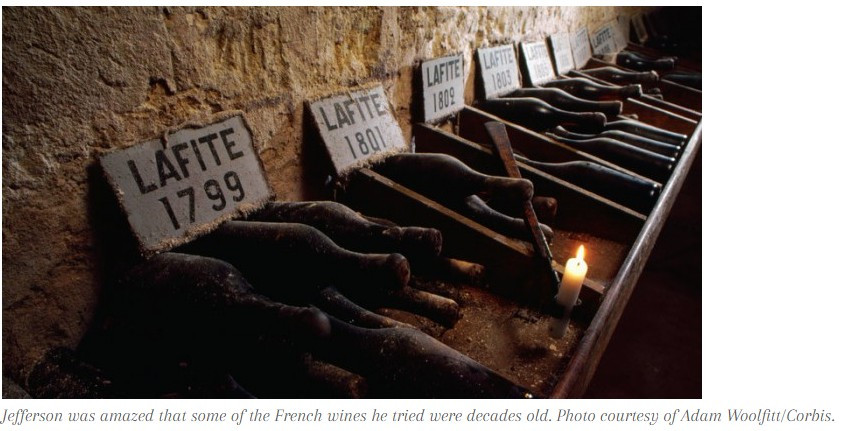
Modern bottles, as we know them today, are credited with a change in storage rooms. The bottles - combined with cork stoppers - allowed wine to age for decades. It was intentionally matured, requiring better cellars, with shelving systems and bottle racks. Horizontal bottle storage became standard to keep corks moist and air tight.
In the 20th Century, refrigeration changed everything. Wine no longer required underground caves. Temperature-controlled cabinets, closets, and rooms become possible. Yet something unexpected happened. Some people still preferred wine cellars.
Why?
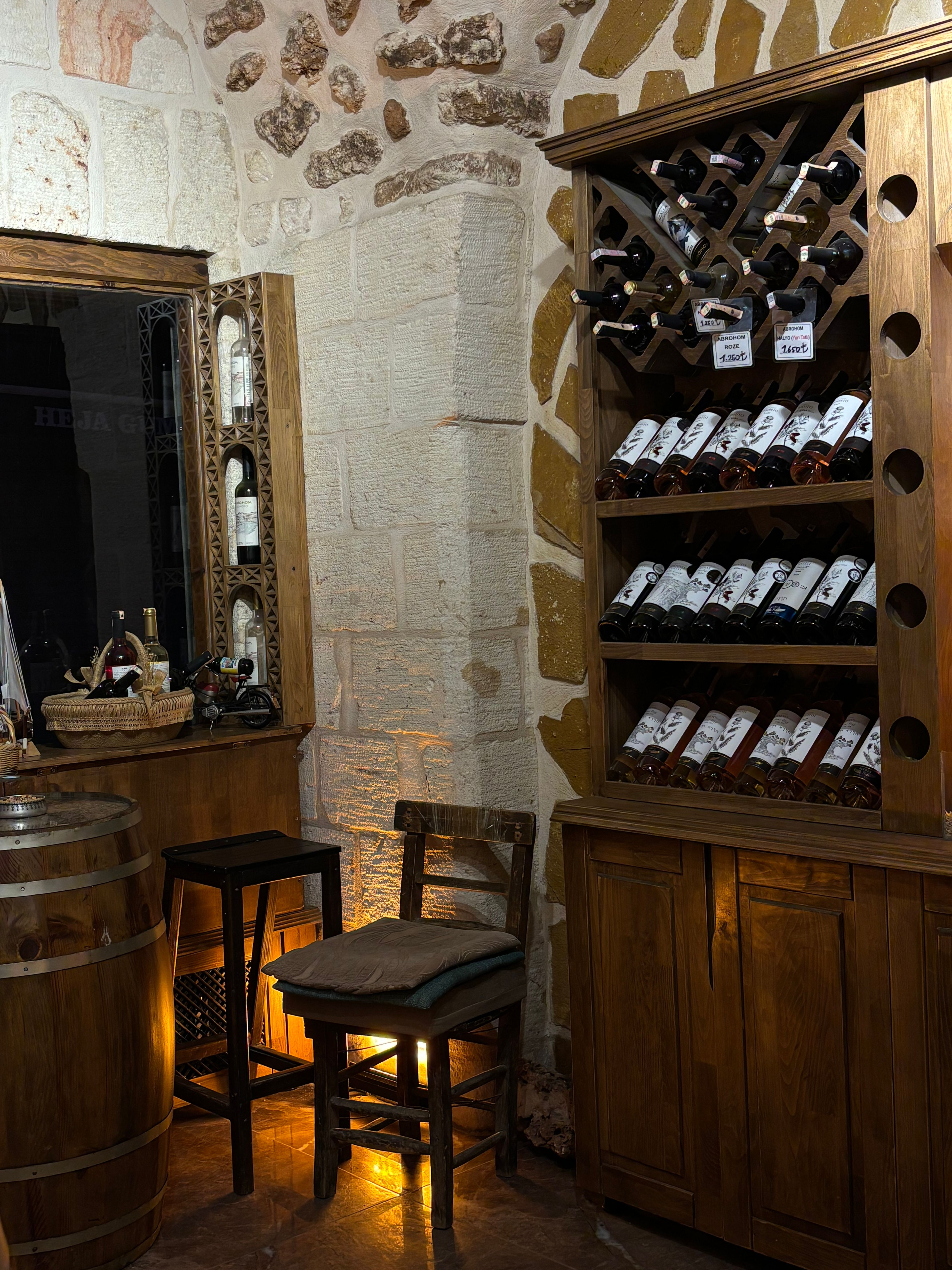
Photo Credit: Tuğçe Şimşek (Pexels.com)
Wine is emotional. Descending stairs creates a psychological shift, leaving everyday lift behind. And the stone walls, dim lighting, aged wood, and the quiet of the room all reinforce ideas of craftsmanship, patience, and tradition. Slowing down comes naturally and signals we are entering a place meant for savoring rather than rushing.
Perhaps the greatest lesson wine cellars offer isn’t about wine at all.
For thousands of years, people built these rooms to protect something valuable from the outside world. Along the way, they discovered that the same qualities that preserve wine-coolness, quiet, enclosure, and consistency-also shape how people feel. The descent into a cellar naturally slows our pace, encourages conversation, and heightens appreciation.
The architecture gently guides behavior. It reminds us that memorable interiors are not only about what we see, but about how a space influences our senses, our rituals, and our relationships.
There are still thousands of personal underground wine cellars around the world. In countries like France, Italy, Germany, Austria, and parts of Spain, underground wine cellars remain remarkably common – especially in older homes.
In the United States, luxury homes, particularly in wide regions such as Napa Valley, Sonoma, Oregon’s Willamette Valley, Virginia, and parts of Washington State, still feature spectacular underground cellars carved into hillsides or built beneath the house.
From a purely practical standpoint, technology has made underground construction less necessary. High-quality refrigeration systems can maintain ideal conditions almost anywhere.
So why do people still choose to build underground?
Because an underground cellar offers advantages that technology along cannot replicate:
Exceptional energy efficiency due to the earth’s insulating properties
Natural humidity that benefits corked bottles
Protection from light and vibration
And perhaps, most importantly a sense of place.
A cellar isn’t simply a place where wine is stored – it’s where a collection is experienced.
An Interesting Trend
One of the most fascinating developments today is that younger homeowners are often less interested in accumulating thousands of bottles of wine and more interested in creating an experience.
For designers that may mean incorporating tasting areas, lounge seating, artwork, custom lighting, and architectural details that transform the cellar into a destination rather than a storage room.
In many homes, the wine room has become a modern interpretation of the old library – a place to slow down, entertain close friends, and enjoy meaningful conversation.
In the United States and Canada, true underground wine cellars are less common because many homes don’t have basements, and modern climate control offers alternatives.
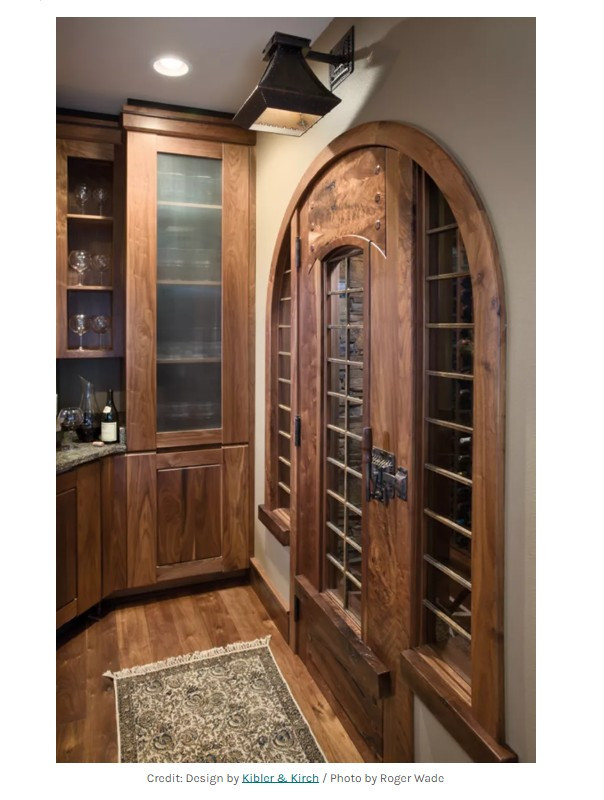
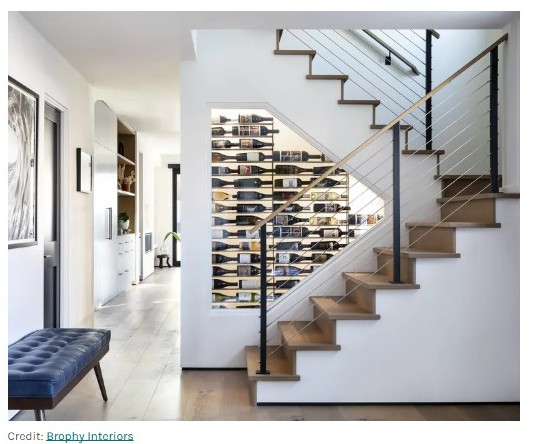
Instead of wine cellars, you’ll often find climate-controlled wine rooms built within the home’s footprint, glass-enclosed wine displays adjacent to dining rooms or kitchens, wine closets tucked beneath staircases or walk-in wine rooms in lower levels or basements.
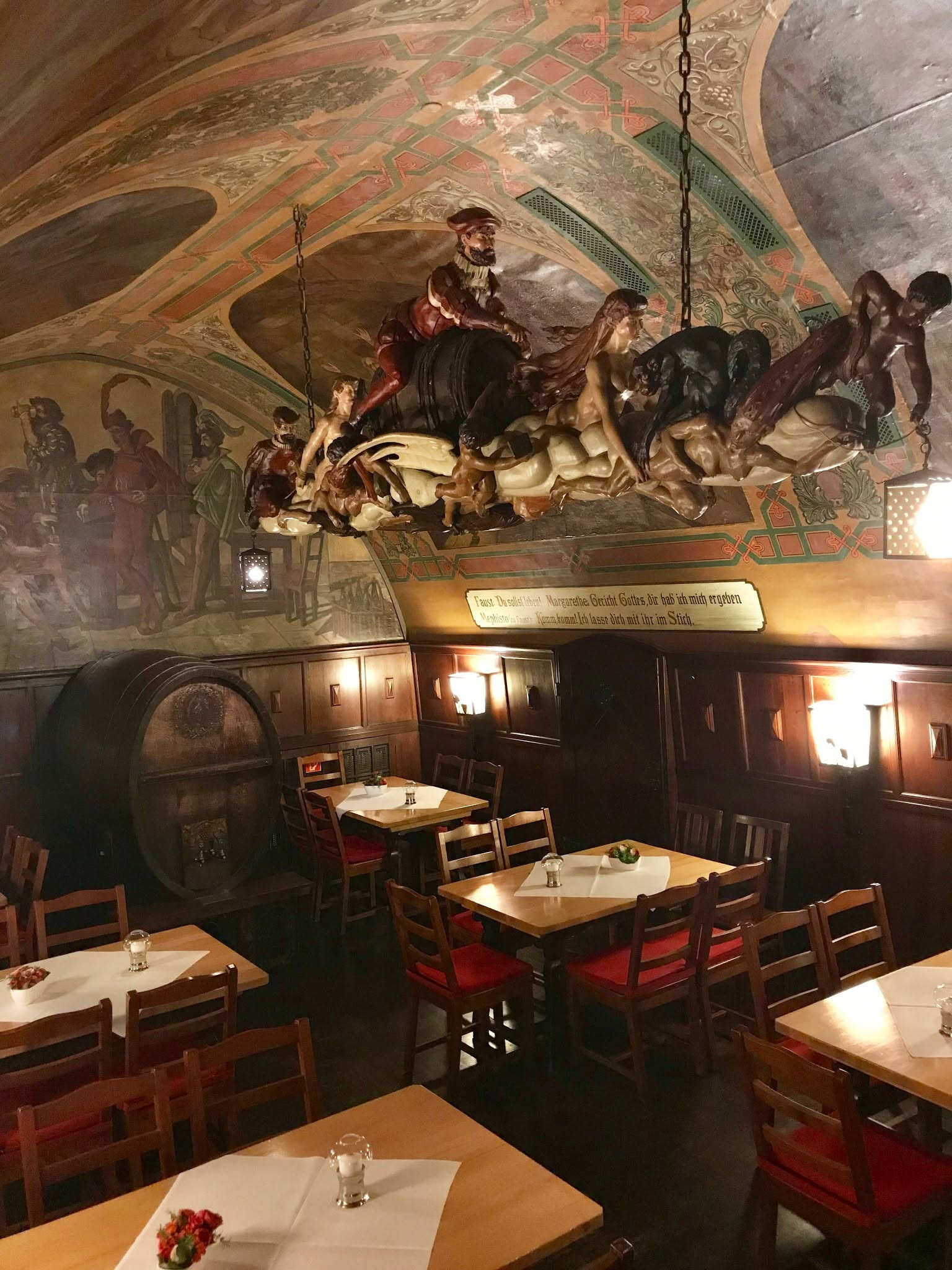
Photo Credit: Hakan Yaman (Facebook); Auerbachs Keller, Leipzig, Germany
The Experience of Transition
The enduring appeal of wine cellars really isn’t about the wine. It’s about the experience of transition.
For thousands of years, people “descended” into wine cellars. That small architectural movement changed everything. As a person walked downstairs, the light softened, the temperature cooled, and the sounds became quieter. The ceilings often became lower, the materials shifted from plaster to stone or brick and aromas changed from cooking to earth and wood.
Without realizing it, a person left one environment and entered another. Today’s homes don’t necessarily need a staircase to accomplish this.
Arrival
Designers can create the same sense of arrival through a carefully choreographed sequence of materials, lighting, scale and sensory cues.
The best wine cellars were rarely visible the moment you entered the home. You “found” them. Today’s designers might create this same feeling with a partially screened wine room, a curved hallway, a pivot door, or carefully framed views that reveal only part of the collection.
The goal isn’t secrecy. It’s anticipation.
Multisensory Atmosphere
Today’s wine room can recreate the multisensory atmosphere as well.
Designers should consider acoustics, texture, indirect lighting, matte finishes, quiet ventilation, and the subtle scent from natural materials.
The experience begins long before the chosen bottle of wine is opened.
Ritual
Modern homes often optimized for speed. Historic wine cellars did the opposite in using ritual.
Perhaps today’s designers should embrace that sense of ritual. Maybe the wine room isn’t directly beside the dining table or even in view. Maybe it becomes a destination within the home. Even going down the hall or into another room can become part of the evening’s rhythm.
Intimacy
Wine cellars were rarely grand. They were enclosed spaces. The room embraced people rather than impressing them. Enclosure creates comfort. Today’s wine room doesn’t need soaring ceilings. It may actually benefit from feeling slightly more intimate.
Storytelling
Historic cellars didn’t simply store wine. They stored memories. Every bottle represented a trip, an anniversary, a celebration, a friendship, a vineyard, or a family tradition. They’re displaying stories.
A Final Thought
Whether designing an underground cellar, a glass-enclosed wine room, or a compact under-stair display, the designer’s task isn’t simply preserving wine. It is preserving anticipation.
The most memorable spaces are those that gently slow us down, encourage ritual, and invite us to linger.
Historic wine cellars accomplished this with stone, earth, and darkness.
Today’s designers can achieve the same emotional effect with thoughtful transition, layered materials, intimate proportions, and carefully orchestrated sensory experiences.