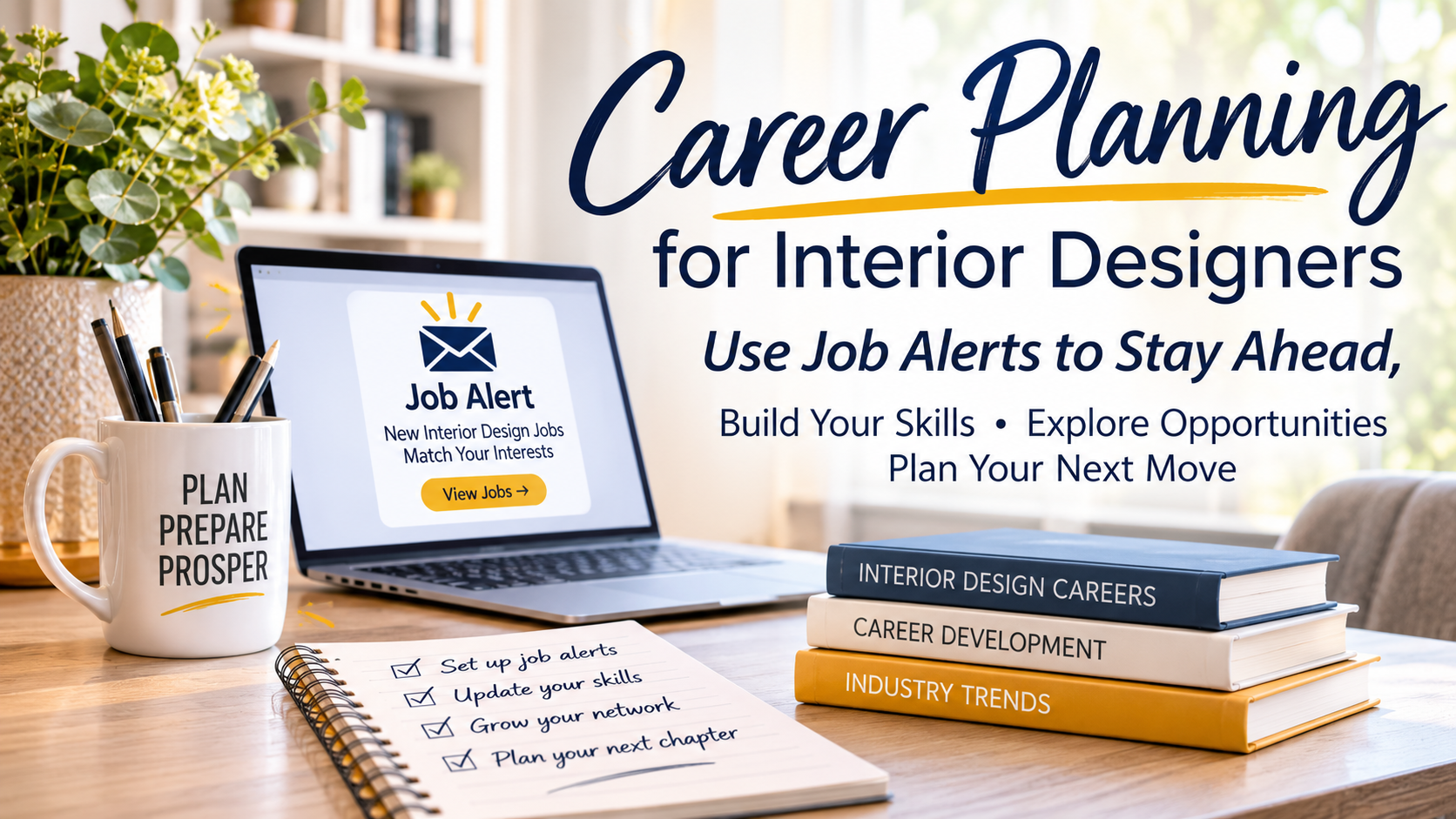
Whether just starting out or have years of experience, career moves begin with understanding what employers expect from you at each stage of your career. Here's how to plan your progression in the interior design industry.
Landing that first job in interior design is an exciting milestone. After years of education, developing a portfolio, learning design software, and navigating the job-search process, now finally putting your knowledge to work in a professional environment.
But here is something many professionals do not think about: What comes next?
Whether you are a recent graduate, an experienced designer, or someone who has spent years managing projects, career planning should not stop once the position has been landed. Too often, professionals concentrate so heavily on performing their current responsibilities that they forget to prepare for that next opportunity – advancing from this point.
Some assume that career advancement will happen naturally. Others become comfortable in their current positions and do not realize the skills that made them successful at one level may not be enough to move them to the next.
Advice I have offered to my students for years is simple: About six months after landing your first job, start looking for your next one.
That doesn't mean you should start preparing a resignation letter or planning an exit from your current employer. It means, begin studying the opportunities above you on the career ladder and identifying what skills will be needed to qualify for them.
And this advice is not just for newcomers. If a person has been working in interior design for several years and feel they have reached a plateau, the same approach can help them identify what is missing and where that career could go next.
Your career should not be something that simply happens to you. It should be something you actively develop.
Think Beyond Your Current Interior Design Position
The first position in an interior design career is often focused on learning the profession from the inside.
Depending on the firm, entry-level opportunities might include:
- Interior Design Assistant
- Junior Interior Designer
- Design Coordinator
- CAD Technician
- Materials or Finishes Assistant
These positions provide valuable experience with the day-to-day responsibilities of a design firm. As a new employee, you may spend time preparing presentations, researching materials, producing drawings, updating specifications, assisting with client meetings, or coordinating with vendors.
It is important to master these responsibilities, but do not assume that performing them well automatically prepares you for the next step up the career ladder.
As more experience is gained, employers will expect a person to take on additional responsibilities. You may be asked to manage portions of a project, communicate directly with clients, coordinate consultants, supervise junior team members, or help manage budgets – valuable lessons and more bullet points for a resume.
For professionals who have already reached the mid-career stage, the challenge can be somewhat different. An accomplished designer with an impressive portfolio and years of successful projects to brag about, might find that opportunities for advancement have become limited.
Perhaps they have become an excellent project designer but have not developed the financial or leadership skills required for a management role. Or possibly managed projects successfully but have not had much exposure to business development or strategic planning.
Recognizing these gaps is a huge first step toward moving upward.
Each step up the ladder brings new expectations. The earlier a person recognizes that progression requires new capabilities, the more time you will have to prepare.
Six Months After landing Your Current Position:
Start looking
Applying for positions is not necessary. Instead, think of this as career research.
As mentioned earlier, this is one of the recommendations I share with my students. After six months into that first professional position, you should be comfortable with the job and the responsibilities. This is when you should begin researching the next level of employment.
A Junior Interior Designer, might start looking at Interior Designer positions. An Interior Designer, may begin thinking about Senior Interior Designer opportunities.
But the same principle applies regardless of how long a person has been in the industry.
Working as a Senior Interior Designer for several years, perhaps it is time to research Design Director or Studio Manager Positions. Already managing a team, look at what employers expect from a Director of Interior Design or a firm Principal.
What are employers asking for????????
- Are they looking for someone who can independently manage projects?
- Do they want experience leading client presentations?
- Are they expecting proficiency in Revit, AutoCAD, SketchUp, or other design technologies?
- Are they looking for someone who can coordinate contractors and consultants?
For more experienced professionals, the requirements may shift toward team leadership, financial management, business development, client retention, and strategic planning.
Requirements found in job descriptions provide a roadmap for your professional development.
Rather than guessing what skills will be needed in two or three years, a person can learn directly from the employers who are advertising the positions.
This is a much more productive approach than waiting until the position opens up – only to find you are not prepared because several important qualifications are missing from your resume.
Let Job Alerts Become Part of Your Career Planning
One of the easiest ways to stay informed about career opportunities is to establish job alerts from relevant job boards.
Most job boards, like Interior Design Careers offers the ability to receive notifications about new positions based on job titles, locations, employment types, and other criteria.
Set up daily or weekly alerts for positions of interest, particularly those one or two steps above a current role.
For example:
- A Junior Interior Designer might follow Interior Designer and Senior Interior Designer opportunities.
- An established Interior Designer might follow Senior Designer and Project Manager positions.
- A Senior Interior Designer might monitor Design Director and Studio Manager opportunities.
- An experienced manager might follow Director of Interior Design, Principal, and executive leadership positions.
Review the listings as they arrive. Pay attention to the qualifications, experience, responsibilities, and technical skills employers consistently mention.
Over time, patterns will present themselves.
Perhaps several firms are looking for candidates with strong project management experience. Others may emphasize client relationship management, budgeting, construction documentation, or team leadership.
For those interested in management, a person may notice increasing demand for financial oversight, staff development, operational efficiency, and business development.
Those recurring requirements are valuable information.
This is solid information to identify training opportunities, seek additional responsibilities within a current firm, or work with a mentor to strengthen areas of weakness.
A job alert is not just a notification about an available position.
It can be an early warning system announcing skills needed to remain competitive.
Identify the Skills Needed “Before” They Are Needed
One of the biggest advantages of monitoring job postings is that a person can identify skill gaps while there is still have time to address them.
For example, suppose you are interested in becoming a Senior Interior Designer. You notice that many employers want candidates with experience managing projects and mentoring junior staff.
This is the nudge needed to start preparing immediately.
Ask your current supervisor to be allowed responsibility for coordinating a small project or mentoring an intern.
Interested in becoming a Design Director? Begin learning about departmental budgets, staffing, scheduling, and resource allocation.
Already a Design Director and considering a move into executive leadership? Start developing an understanding of business development, financial performance, strategic planning, and organizational management.
There are several ways to develop these capabilities:
Take additional courses. Continuing education, professional development programs, and business courses can help fill knowledge gaps.
Volunteer for additional responsibilities. Look for opportunities within the firm to participate in project coordination, budgeting, presentations, or team leadership.
Find a mentor. Someone who has already reached the position you are working toward can offer valuable insight into the responsibilities and challenges involved.
Learn from other departments. Working with accounting, marketing, human resources, purchasing, or operations can expose a person to the business side of interior design.
Build your professional network. Relationships with other designers, architects, contractors, vendors, and industry professionals can create opportunities for learning and advancement.
For experienced professionals, it is particularly important not to assume that years on the job automatically translate into readiness for advancement. Experience is valuable, but employers also want to see growth, adaptability, and an expanding set of capabilities.
The objective is to make yourself a stronger candidate “before” the next opportunity presents itself.
Do Not Forget Your Portfolio and Professional Presence
As responsibilities increase, a portfolio should evolve along with your career.
An entry-level portfolio may emphasize design school projects, creative concepts, renderings, and technical abilities.
A more experienced designer should demonstrate professional projects, design contributions, problem-solving abilities, and an understanding of the complete design process.
For senior and management positions, employers may also want evidence of project leadership, client relationships, team development, and successful project outcomes.
Be sure to keep your resume current, too. Document new responsibilities, software skills, certifications, and accomplishments as they happen.
Don't wait until you are actively applying for a position to reconstruct
several years of professional experience from memory.
A person's professional online presence matters as well. Keep that LinkedIn profile updated and make sure your portfolio reflects the level of work you want to be considered for.
Do not wait until you have a chance for a promotion to discover what you need to learn. Whether six months into that first job or fifteen years into your profession, start preparing today. When that next opportunity arrives, you'll be ready to take it.
-------------------------------------------------------
Ready to take that next step for your interior design career?
Explore opportunities, discover employers, and sign up for job alerts today at: