Photo Credit: StockCake
How the Conversation Pit evolved
For interior designers, the words “Conversation Pit” almost always bring an image of a step-down area in a living room with a 3/4 circle of cushioned seating facing forward made popular in the 1950s. However, the idea is far older than that.
Gathering Around a Hearth
The word “conversation,” according to the Cambridge Dictionary, means “an interactive exchange of thoughts, ideas, feelings, or information between two or more people.” It evokes a sense of warmth within a safe setting.
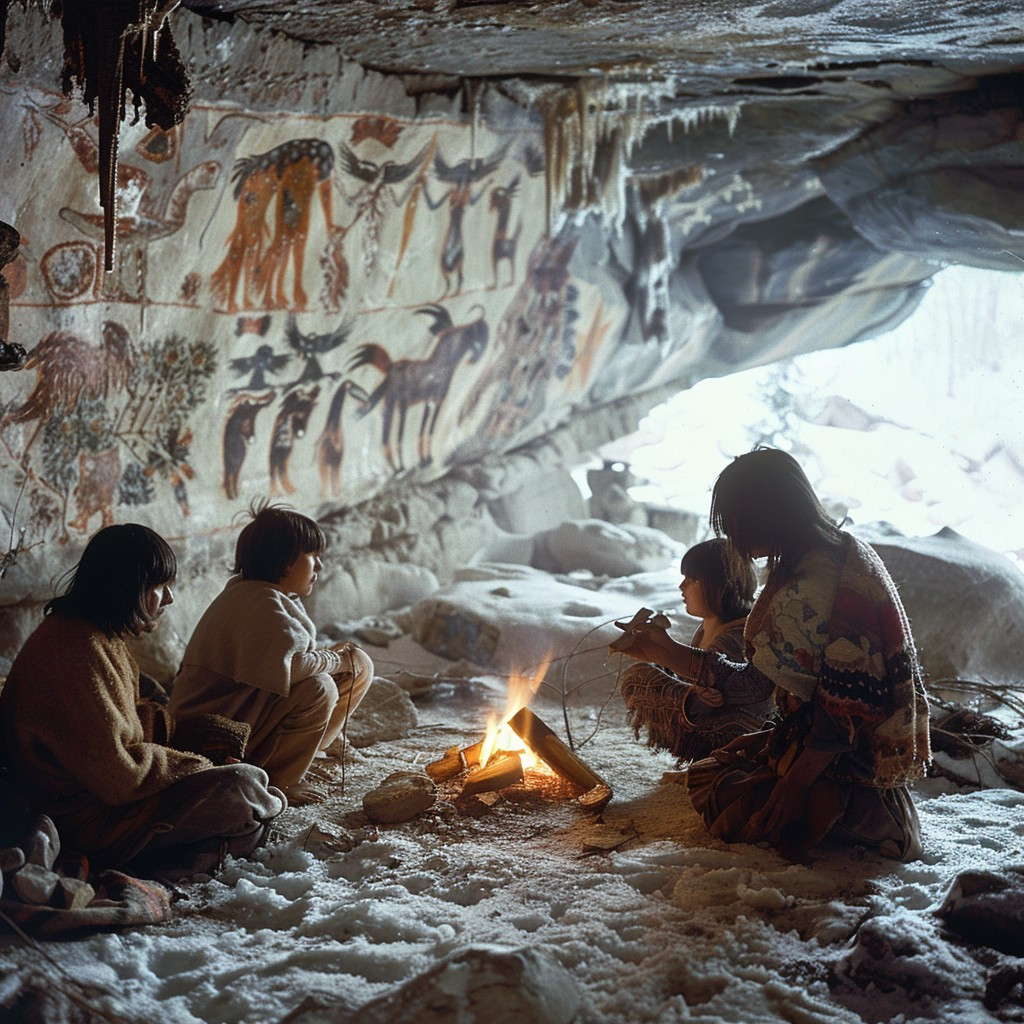
Cave paintings show us that our earliest ancestors gathered around a fire facing forward – in a full circle to maintain awareness of possible danger – to stay connected, share meals and hear stories of the day’s adventures within a safe space. Today’s campers follow their example.
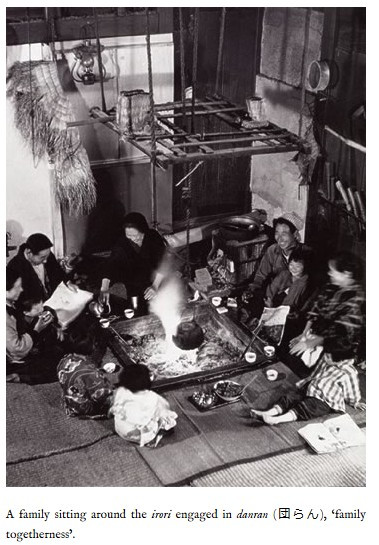
Photo Credit: https://www.folko.com.au
Traditional Japanese irori (sunken hearths) have existed for centuries. Japanese families use this recessed square space for preparing food and heating homes. The irori is a traditional home featuring sunken hearths surrounded by seating.
Before central heating, the fireplace in the Western world served as the gathering point for families. Warmth from the fire radiated a limited distance and the family gathered around it for the warmth. With everyone roughly equidistant from the fire and facing each other, eye contact and conversation were easy to maintain.
In the 1600s, while many European homes still maintained and used a “great hall,” smaller rooms began to appear allowing for more privacy with the benefit of being easier and less expensive to heat. The tradition of gathering around the hearth continued.
The tradition continued through the 19th century in American Colonial homes, Victorian sitting rooms and Georgian parlors.
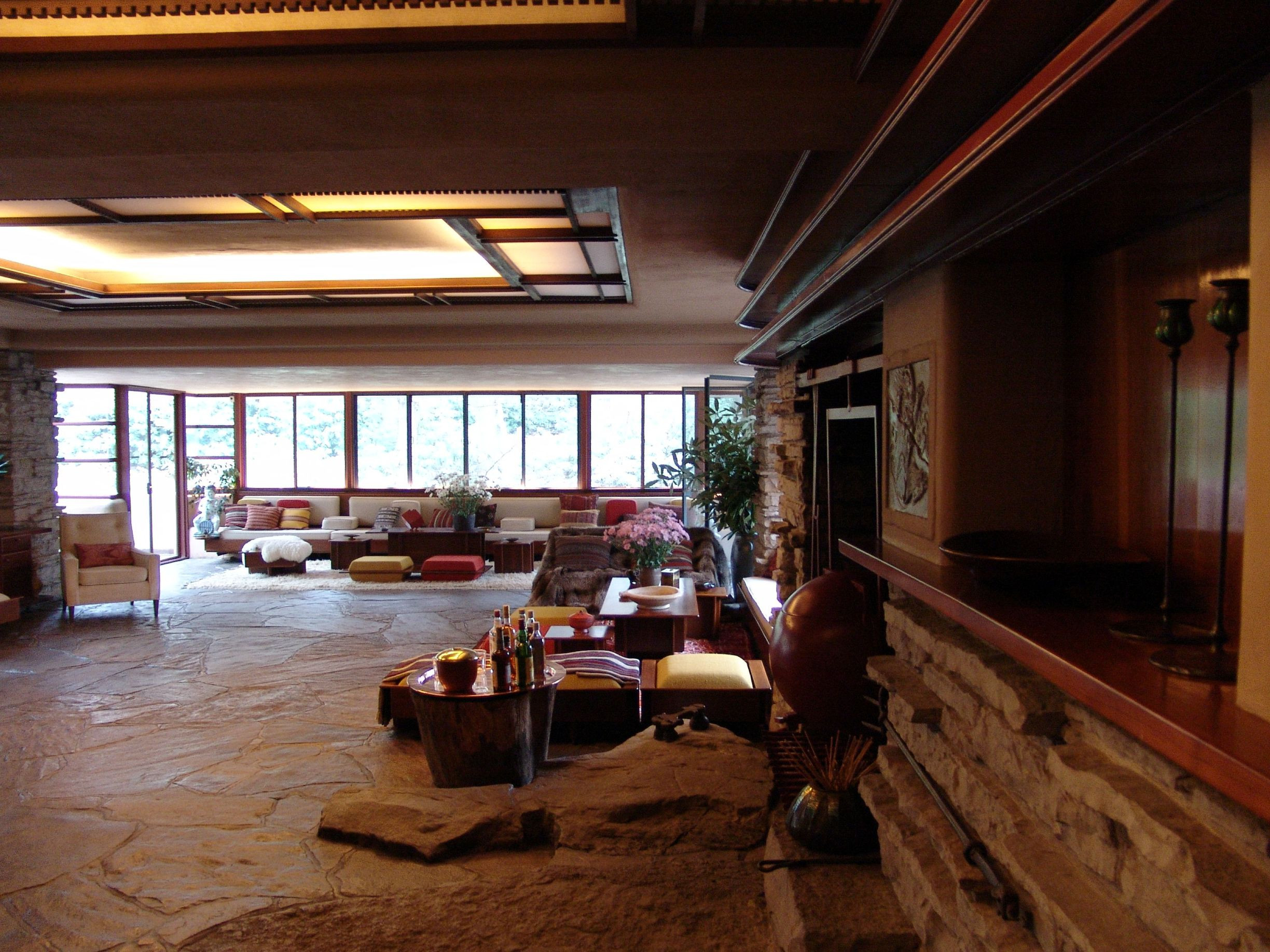
Photo Credit: http://www.wright-house.com
Frank Lloyd Wright was Already Experimenting
Although he rarely designed true conversation pits, throughout the 1930s and 1940s, Frank Lloyd Wright was experimenting with open spaces and floor heights. To create a feeling of movement through the home, he used compressed entrances, lowered ceilings, raised living rooms and split-level interiors. By stepping down – or occasionally up – homeowners and visitors experienced an emotional transition from one space to another. Creating psychological comfort through changes in floor level would later become one of modern architect’s favorite tools. Wright’s design, Falling Water, seen above, shows a separated conversation area.
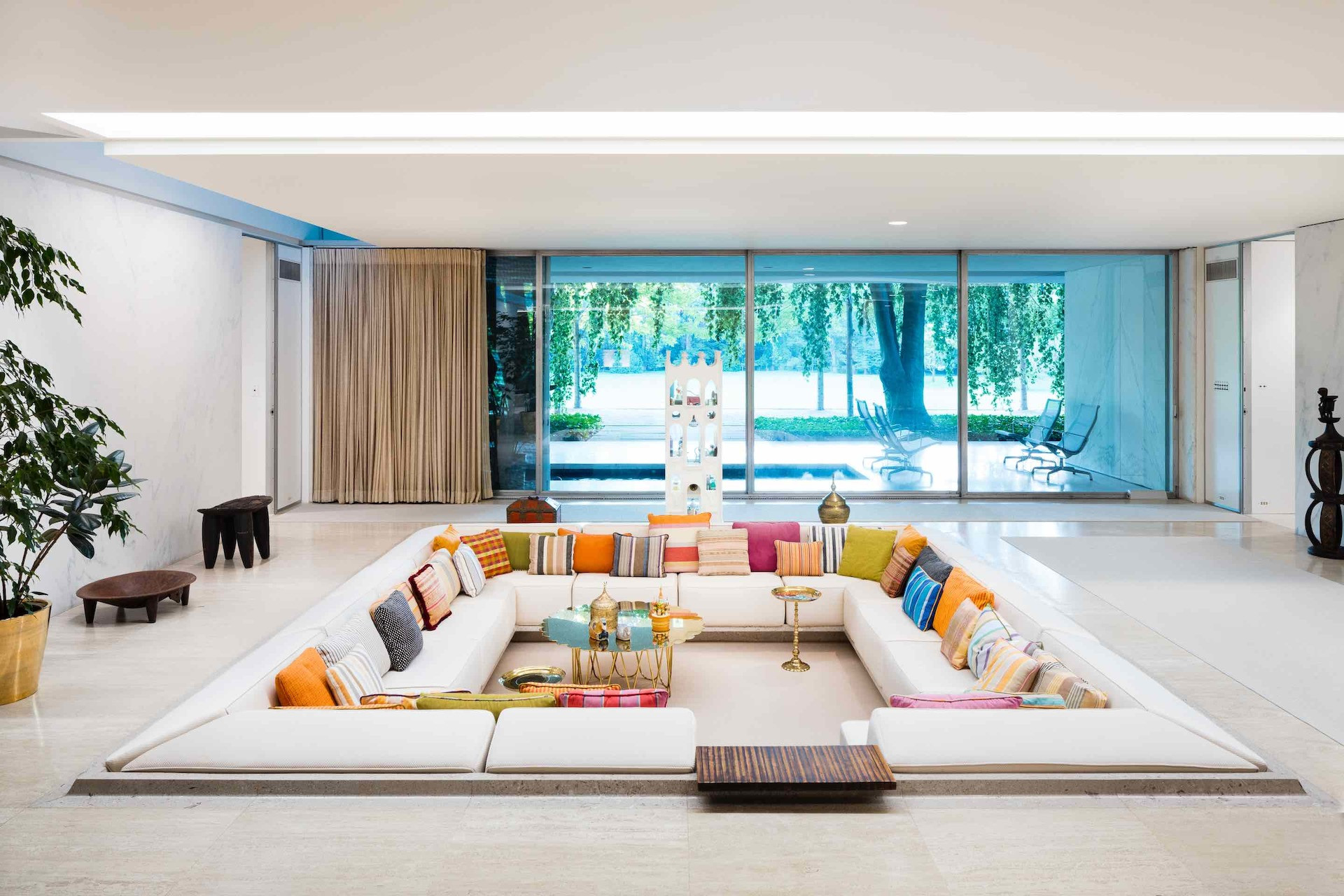
Photo Credit: HermanMiller.com
Alexander Girard and Eero Saarinen create something different
Perhaps the person most closely associated with the modern conversation pit is Eero Saarinen, the architect who worked with interior designer Alexander Girard to design the conversation pit in the 1958 Miller House in Columbus, Indiana. Rather than arranging sofas around the perimeter of the room, Saarinen literally lowered the seating area and designed a space that felt warm and inviting. Girard layered bold textures, folk art, and rich colors into the space, proving that architecture and interior design works hand in hand. The architecture creates the opportunity for connection. The interior designer creates the experience. The result was well-received. Open floor plans were becoming increasingly popular during the 1950s and architects needed ways to define rooms without actually adding wall. This visually separated, intimate and psychologically comfortable space solved the problem elegantly.
The Golden Years
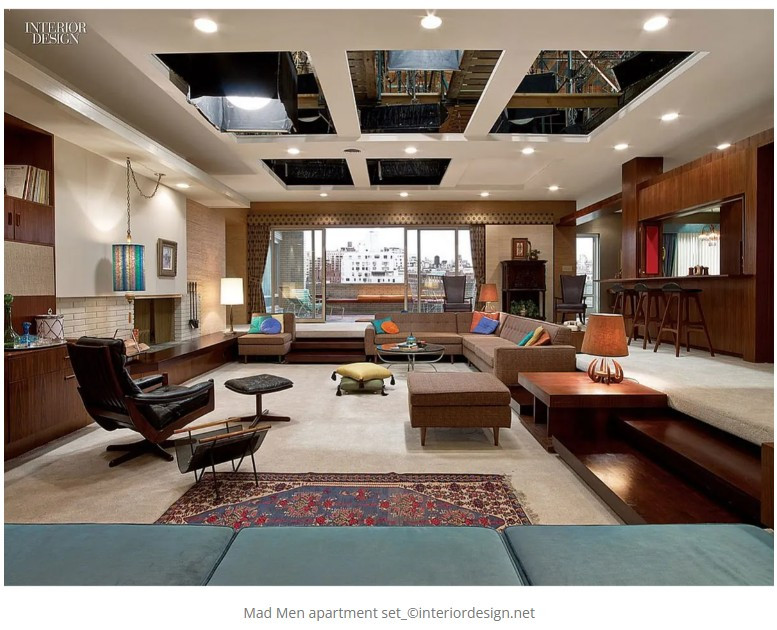
After the war, suburban entertaining became a part of everyday culture. Home shifted from being primarily family spaces to places for hosting friends and family. Conversation pits encourage exactly that. Everyone naturally faced each other and nobody sat isolated against a wall. These spaces encouraged relaxed interactions. The focused remained on the people and the conversations.
The television show Mad Men was set between early 1960 and late 1970 and included the conversation pit seen above.
Architects didn’t lower floors simply because they looked fashionable. Environmental psychology suggests that subtle enclosure create feelings of comfort and safety. Interior designers sometimes describe this as “prospect and refuge”- the ability to see out into a larger space while still feeling protected.
Why They Fell Out of Favor
During the 1970s and 1980s residential conversation pits gradually fell out of favor. Large formal entertaining declined; changes in floor level became less desirable due to safety concerns for both children and aging adults; homeowners were beginning to plan for aging in place; and families began to gather around the television resulting in fewer conversations.
Not Only For Residences
Although residential conversation pits receive most of the attention, the idea spread well beyond private homes. Architects adapted the concept for hospitality, corporate offices, libraries, and public buildings. Hotels - such as the Hyatt Regency Atlanta (architect John Portman) and the Marriott Hotels and Holiday Inns created spaces that encouraged their guests to linger, converse and people watch. Corporate headquarters for companies such as Herman Miller, Steelcase, IBM and Xerox created recessed lounges for brainstorming somewhere other than a conference rooms.
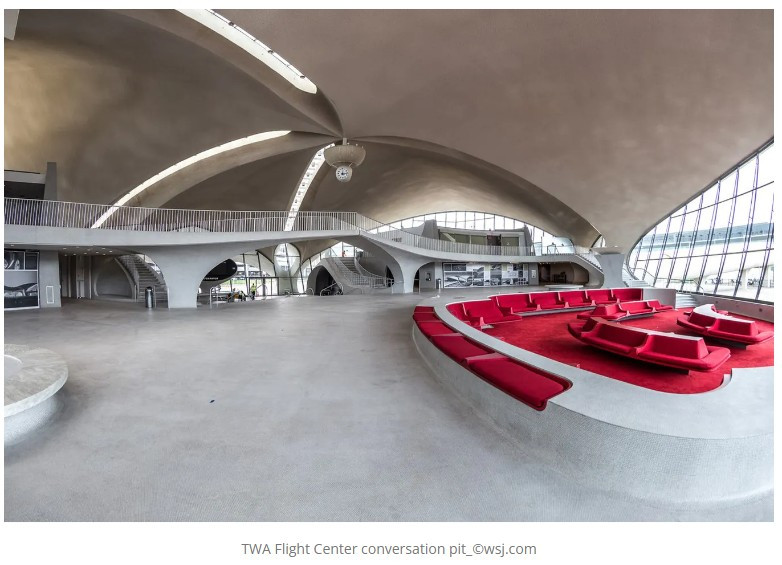
Many university buildings incorporated sunken lounges in their student unions, residence halls, learning commons and faculty centers to encourage spontaneous interaction among their population. The Geisel Library’s interior in San Diego includes varied floor levels, and guilt-in seating that create intimate reading areas. Several airports, built during this time featured lowered waiting lounges such as JFK’s TWA Flight Center. A similar design philosophy can also be seen in grand train terminals of the time such as Grand Central Terminal, Cincinnati Union Terminal, and Los Angeles Union Station whose architects often used subtle changes in floor level, broad staircases, and recessed waiting areas to create intimate gather places within monumental public spaces.
The conversation pit or related space solved an interesting architectural problem. Large modern buildings had been increasingly more open. The architects had several tools at their disposal: lighting; ceiling height; furniture arrangement; flooring materials and changes in elevation. The conversation pit was simply one of the more dramatic ways to define space while maintaining openness.
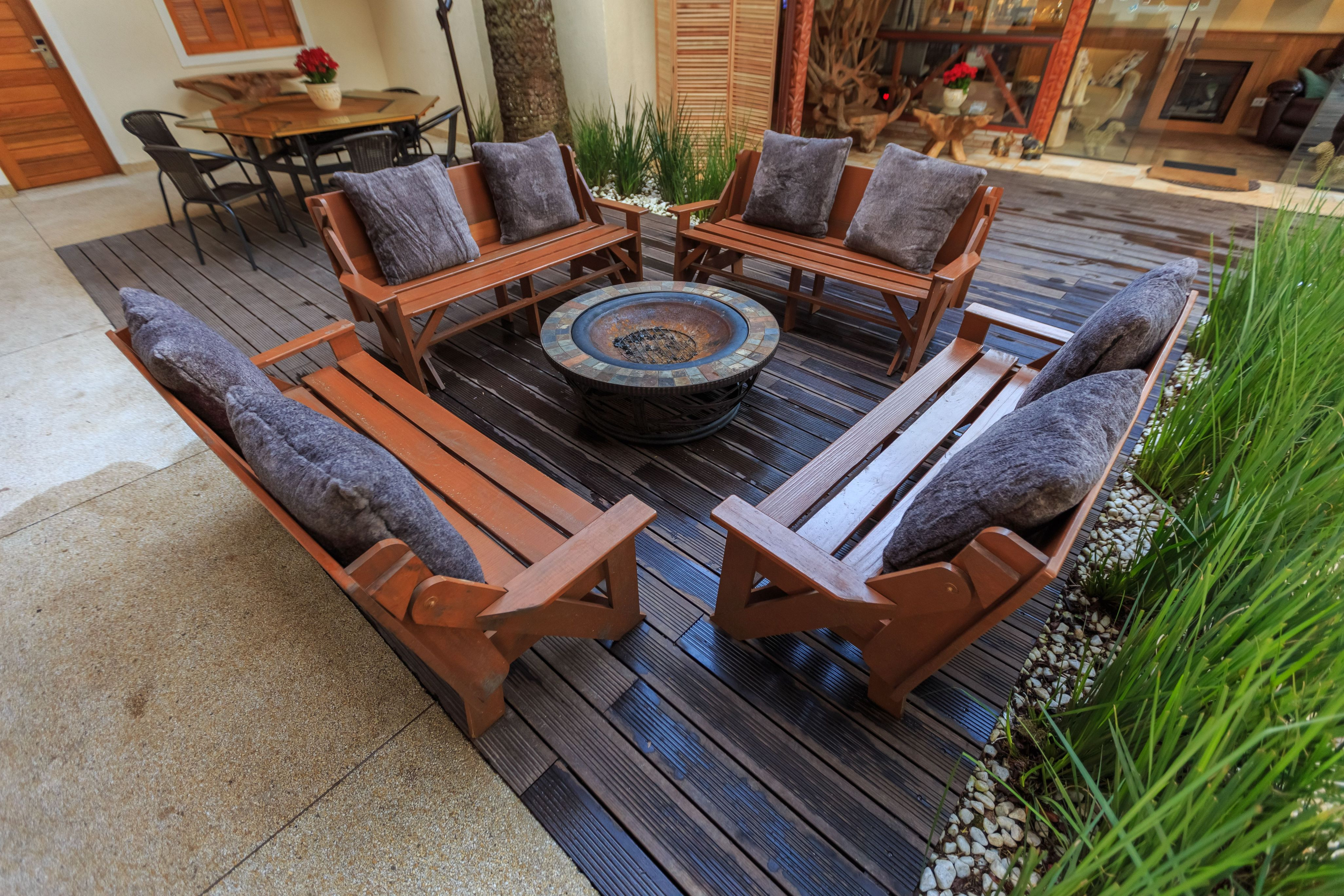
Photo Credit: Matheus Bertelli (pexels.com)
They’re Quietly Returning
Conversation pits or elements of them are quietly returning. Rather than recreating the dramatic 1960s version, today’s version tend to be subtler. Luxury homes sometimes include one or two steps instead of several, fireplaces, flexible furniture arrangements and sectional seating and indoor-outdoor connections.
Boutique hotels are embracing cozy, lowered lounges that invite guests to linger. Public libraries often include terraced reading areas or conversation nooks. Many corporate offices have adopted “sunken collaborative spaces.” Companies are discovering that lowering seating changes behavior – people become more relaxed; meetings feel less formal; and discussions often become more creative.
Design Lessons for Today’s Interiors
So, how does an interior designer amplify what the architecture has already begun?
Begin with the psychology, not the furniture. A conversation pit is essentially a room within a room. The most successful conversation spaces don’t simply provide a place to sit. They invite people to linger.
Create a visual embrace through color. One of the easiest ways to reinforce intimacy is through color. Rather than allowing the space to visually disappear into the larger room, designers can give it its own identity with a carefully considered palette. Earthy greens, warm camel, rich terracotta, deep blues, and muted ochres naturally make a space feel grounded. A slightly richer palette within the seating area can signal that guests have entered a distinct destination rather than simply another part of the room.
Layer texture to encourage staying. Environmental psychology consistently shows that people tend to spend more time in spaces that feel comfortable on multi-sensory levels. A conversation area should invite touch as much as conversation. Think beyond upholstery. Layer woven throws, linen pillows, wool boucle, soft leather, natural wood, and hand-knotted rugs. Varying textures create visual warmth and encourage guests to settle in rather than perch on the edge of a seat. The richness of texture often matters more than visual complexity.
Design Lighting at Human Scale
Lighting has an enormous influence on how intimate a space feels. Instead of relying on overhead fixtures alone, designers can layer light at seated eye level. Table lamps, floor lamps, discreet wall sconces, and even the glow of a fireplace create pools of warm illumination that naturally draw people together. The architecture lowers the occupants. The lighting should follow. Rather than illuminating the entire room equally, gentle lighting focused within the conversation pit reinforces its role as the social heart of the home.
Make the Center Meaningful
One fascinating characteristic of classic conversation pits is that they rarely left the center empty. Instead, they often featured a focal point that encouraged people to orient toward one another. Historically this might have been a fireplace, a sculptural coffee table, a planter, a work of art, or a view through expansive windows. The focal point wasn't intended to compete with conversation—it simply gave everyone's gaze a natural resting place between moments of eye contact. Today, designers might use a handcrafted table, a striking floral arrangement, or even a beautifully detailed tray with books and candles to achieve the same effect.
Soften the Acoustics
One aspect that's often overlooked is sound. Conversation becomes easier when people don't have to compete with echoes. Soft furnishings, upholstered seating, rugs, curtains, and textured wall finishes help absorb sound, creating an environment where voices carry comfortably without becoming intrusive. It's a subtle intervention, but one that greatly enhances the sense of intimacy.
Arrange Seating for Equality
The geometry of the seating matters. Long, linear sofas tend to direct attention in one direction. Conversation pits, by contrast, encourage face-to-face interaction. Curved sectionals, gently angled chairs, and rounded ottomans allow everyone to participate without anyone occupying a dominant position. This is one reason circular and semicircular seating became so closely associated with the concept during the Mid-Century era. Everyone shares the same visual and conversational plane.
Introduce Biophilic Elements
Plants were almost inseparable from many iconic conversation pits of the 1960s and 1970s. This wasn't merely fashionable. Research on biophilic design suggests that natural materials and living plants can reduce stress and improve well-being. A sculptural indoor tree, lush ferns, or even a collection of smaller plants can soften architectural lines while reinforcing the feeling of retreat. Natural materials such as stone, wood, linen, and wool further strengthen this connection.
Give the Space a Purpose Beyond Conversation
Ironically, the best conversation pits aren't designed only for conversation. They become places to read, play games, enjoy morning coffee, celebrate holidays, or simply unwind. Interior designers can reinforce this flexibility with thoughtful details: integrated bookshelves, hidden storage for games or blankets or side tables within easy reach. When a space supports everyday rituals as well as social gatherings, it becomes an indispensable part of the home.
Respect the View In and Out
One of the psychological strengths of a conversation pit is that it offers refuge without complete separation. Designers should preserve that quality by maintaining clear sightlines. Avoid tall furniture or oversized accessories that visually isolate the recessed area. Instead, frame views to fireplaces, gardens, artwork, or adjacent rooms so occupants feel connected to the larger environment while enjoying a sense of enclosure.
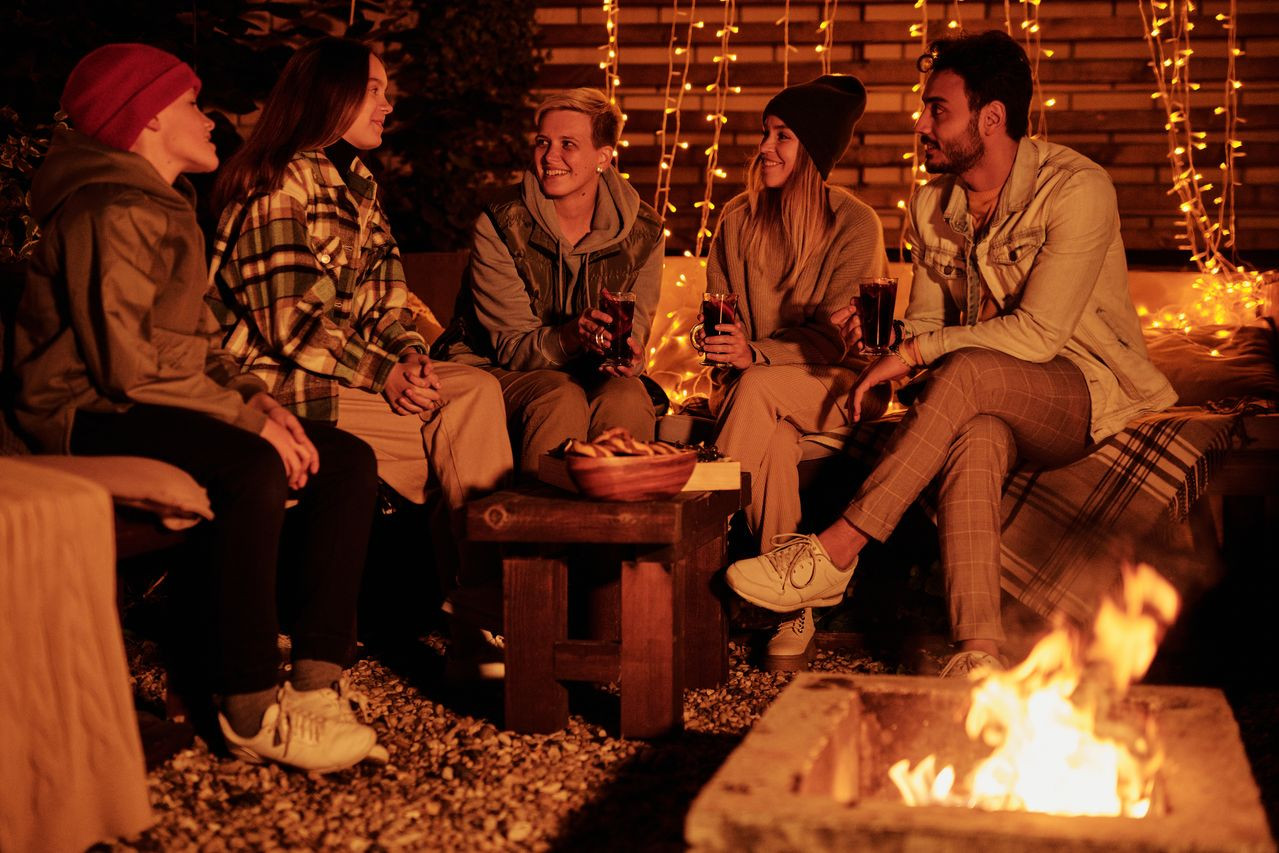
Photo Credit: Askar Abayev (pexels.com)
The Power of Connection
Perhaps the conversation pit’s greatest legacy isn’t its distinctive shape or mid-century pedigree. It’s the reminder that meaningful designs reinforce the feeling of belonging. The most memorable spaces invite us to pause from our routines, sit down, settle in, and enjoy one another’s company. Whether gathered around an ancient hearth, a Colonial or Victorian fireplace, or a contemporary lounge, good design has always found ways to bring people together.