
Introduction: Before It Was “Mid-Century,” It Was European Modernism
For many U.S.-based interior designers, mid-century modern design is synonymous with postwar American optimism—think Palm Springs homes, Eames lounge chairs, and open-plan living. Yet the philosophical and aesthetic DNA of mid-century modern interior design was firmly established decades earlier in Europe. Long before the style crossed the Atlantic, European designers were already grappling with how interiors should respond to modern life, mass production, and shifting social values.
The European origins of mid-century modern design are not a single story but a convergence of movements, regions, and ideologies. From Germany’s Bauhaus school to Scandinavian democratic design and Italian experimentation, Europe provided the intellectual framework and visual language that later flourished in the United States.
The Bauhaus: Function as a Moral Imperative
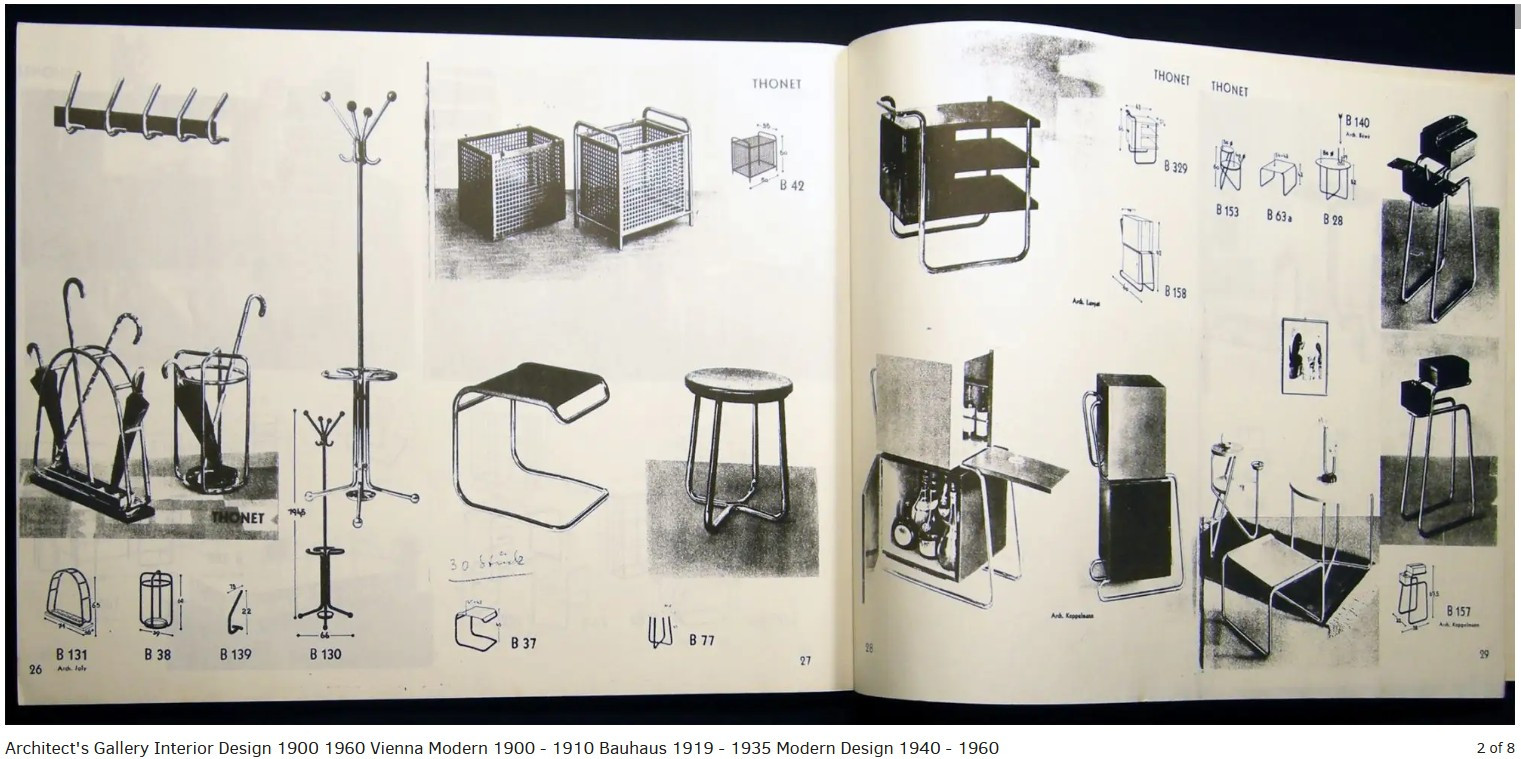
No discussion of European influence on mid-century modern interiors can begin anywhere but the Bauhaus. Founded in 1919 by Walter Gropius in Weimar, Germany, the Bauhaus was not merely a design school—it was a radical rethinking of how art, craft, and industry could coexist. Its guiding belief was that good design should be accessible, functional, and socially responsible.
Bauhaus interiors rejected ornamentation in favor of clean lines, rational layouts, and honest materials. Furniture was designed for mass production, interiors were light-filled and flexible, and decoration was considered unnecessary if it did not serve a purpose. Steel tubing, bent plywood, glass, and modular systems became defining elements.
While the Bauhaus itself was short-lived, its influence was immense. When Bauhaus leaders emigrated to the U.S. during the 1930s, they carried these ideas with them, directly shaping American mid-century interiors. For today’s interior designers, the Bauhaus represents the philosophical backbone of mid-century modernism.
De Stijl and the Abstraction of Space
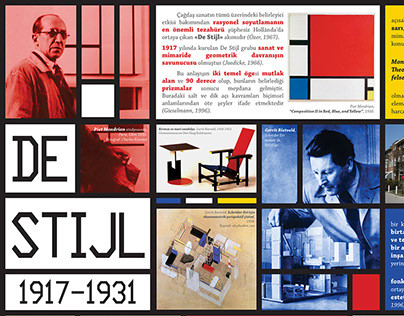
Running parallel to the Bauhaus was De Stijl, a Dutch movement founded in 1917 and closely associated with artists and designers like Piet Mondrian and Gerrit Rietveld. While often discussed in terms of painting and architecture, De Stijl had a profound influence on interior design thinking.
De Stijl interiors emphasized abstraction, asymmetry, and a limited color palette—typically black, white, gray, and primary colors. Spaces were conceived as dynamic compositions rather than static rooms, with furniture and planes interacting visually. Rietveld’s Red Blue Chair is perhaps the most famous example of this philosophy translated into furniture.
For mid-century modern interiors, De Stijl introduced the idea that interiors could be visually reduced without feeling cold, and that furniture could act as sculptural elements within space. These concepts later appeared in American interiors through open plans, floating storage, and color-blocked accents.
Scandinavian Modernism: Human-Centered Simplicity
If the Bauhaus provided rigor and ideology, Scandinavian modernism brought warmth and humanity to mid-century interiors. Emerging in Sweden, Denmark, Finland, and Norway in the 1930s and 1940s, Scandinavian design focused on livability, craftsmanship, and democratic access to good design.
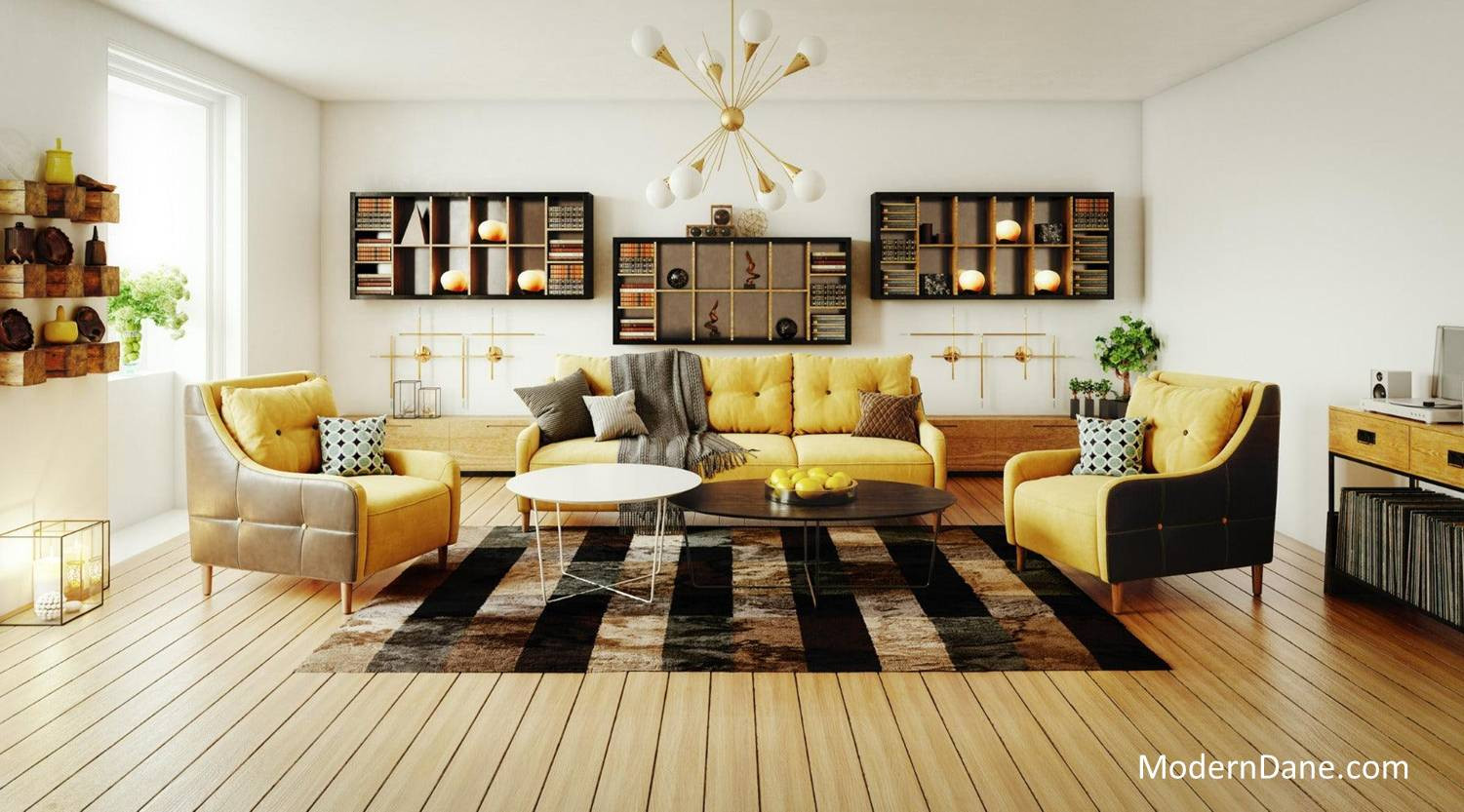
Scandinavian interiors favored natural light, organic forms, and materials such as wood, wool, and leather. Furniture was modern yet inviting, designed to support everyday life rather than impose a theoretical aesthetic. Designers like Alvar Aalto, Arne Jacobsen, and Hans Wegner created interiors that felt both modern and deeply personal.
For U.S. interior designers, Scandinavian modernism is often the emotional bridge between European modernism and American mid-century style. The emphasis on comfort, nature, and approachable modernity remains highly influential in residential interiors today.
Italian Modern Design: Innovation Meets Craft
Italy’s contribution to mid-century modern interiors is sometimes overlooked, yet it played a crucial role in expanding the movement’s expressive range. Italian designers embraced modern materials and industrial techniques while maintaining a deep respect for craftsmanship and artistry.
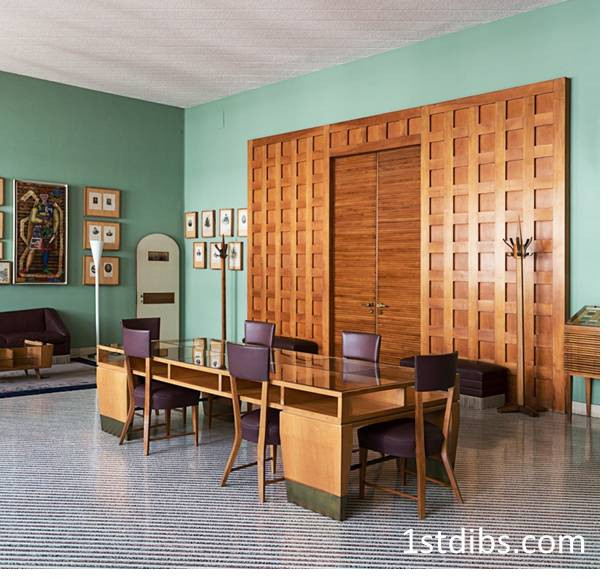
Postwar Italian interiors experimented with new forms, bold colors, and innovative layouts. Designers such as Gio Ponti and Marco Zanuso blurred the line between architecture, furniture, and interior decoration. Italian modernism proved that mid-century design could be both functional and expressive.
This balance of innovation and elegance resonated strongly with American designers seeking alternatives to strict minimalism. Italian influence can be seen in the sculptural furniture and playful material contrasts common in later mid-century interiors.
Social Change, Industry, and the Modern Home
Across Europe, the rise of mid-century modern interior design was inseparable from broader social and economic change. Industrialization enabled mass production, while shifting family structures and urban living demanded new approaches to space planning. Interiors needed to be efficient, adaptable, and affordable.
European designers responded by creating open layouts, built-in storage, multifunctional furniture, and standardized components. These solutions directly informed the American mid-century home, particularly in postwar housing developments.
Understanding this context allows today’s interior designers to see mid-century modern not as a static style, but as a problem-solving approach rooted in real human needs.
From Europe to the United States: A Design Migration
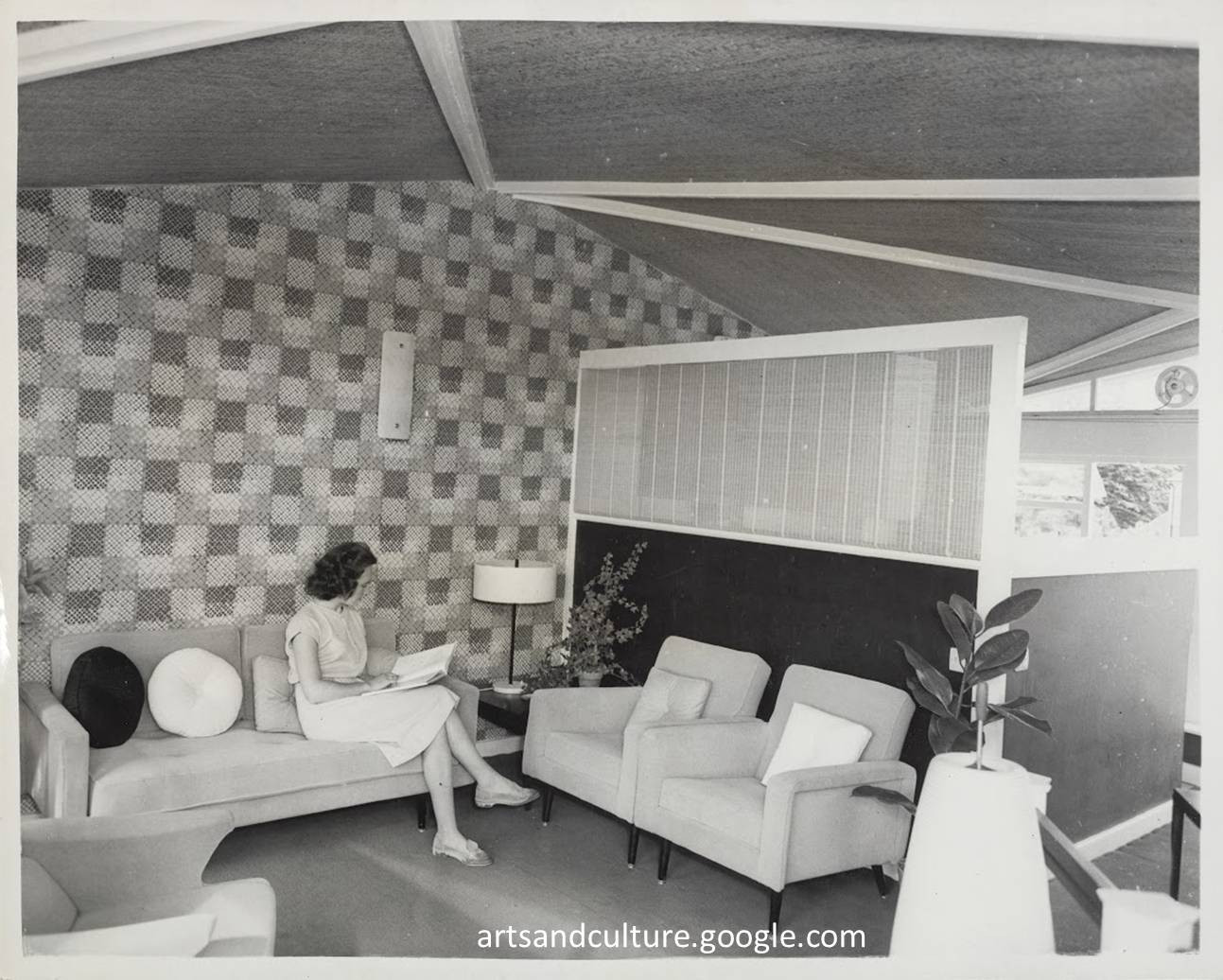
By the mid-20th century, European modernist ideas had firmly taken root in the United States. Emigrating designers, international exhibitions, and design publications carried European concepts across the Atlantic. American designers adapted these ideas to local materials, climates, and cultural values.
For U.S. interior designers today, recognizing the European origins of mid-century modern design adds depth and authenticity to contemporary interpretations. It reframes the style not as nostalgia, but as an ongoing dialogue between function, beauty, and modern life.
Conclusion: Why the European Origins Still Matter
Mid-century modern interior design did not begin in California—it began in European classrooms, workshops, and homes where designers asked fundamental questions about how people should live. The Bauhaus, De Stijl, Scandinavian modernism, and Italian design movements collectively shaped an approach to interiors that remains relevant today.
For interior designers in the United States, understanding these European roots offers more than historical knowledge. It provides a richer design vocabulary, deeper storytelling for clients, and a reminder that the best interiors are born from purpose, empathy, and innovation.