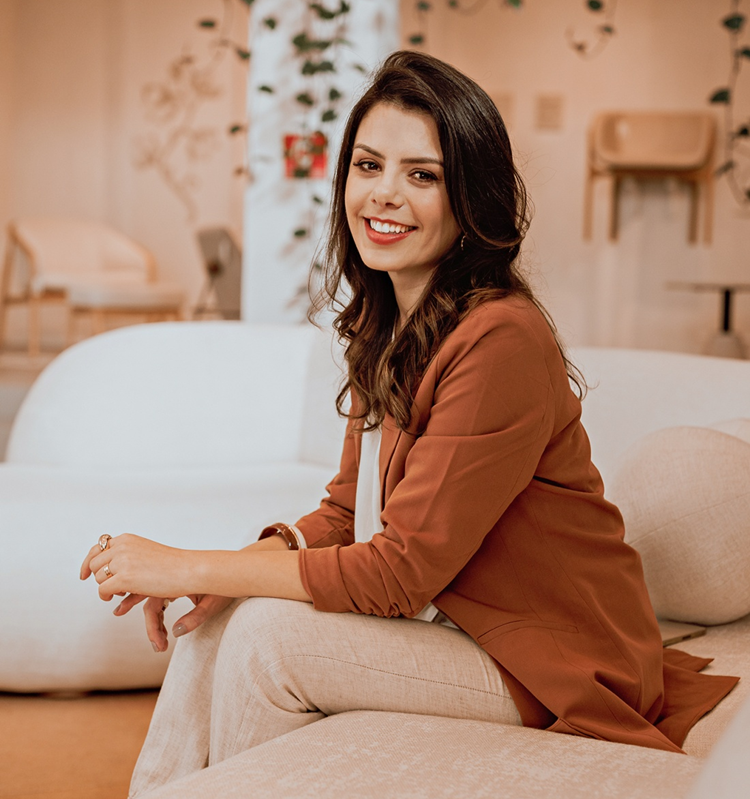
Karine Bastos - Guest blog post writer, bio at end of article
Over the past few years, I have been paying close attention to the changes taking place in the architecture and interior design job market. Some shifts were already predictable, while others seem to be happening much faster than we imagined. The rapid adoption of artificial intelligence has made this even more evident.
Tools that only recently seemed experimental are becoming part of many professionals’ daily routines. Today, AI already supports research, reference gathering, image development, presentations, information organization, text review, and a growing number of creative and operational processes.
However, this transformation has already moved one step further. AI is no longer acting only as a consulting or support tool; it is beginning to take on an execution role as well. It can now help structure project specifications, organize spreadsheets, build FF&E lists, support the production of technical drawings, develop renderings, prepare presentations, and transform scattered information into clearer, more organized documents.
This changes the way work is structured inside design firms. In the past, digital tools helped professionals perform tasks. Now, in certain stages of the process, technology is participating directly in production. As a result, the professional role is beginning to shift: less time spent only executing, and more time spent guiding, reviewing, selecting, correcting, and making decisions.
Technology is gaining speed. Professionals need to gain judgment.
Nevertheless, I believe the most important transformation is not limited to the tools we use. It is also changing the way we work and, perhaps most importantly, the way we build teams.
For a long time, architecture and interior design were viewed as inherently local professions. Professionals were expected to be physically present in the office, attend in-person meetings, access internal files, and work closely with the rest of the team. That model still makes sense for certain roles and stages of a project. Visiting a jobsite, experiencing a space, reviewing materials in person, and following key construction decisions remain important parts of the profession.
At the same time, a large portion of the work performed inside a design studio now happens in front of a screen.
Technical drawings, 3D modeling, renderings, presentations, FF&E specifications, vendor research, product sourcing, layout development, detailing, revisions, and document organization can all be completed from almost anywhere.
Technology changes the logic of hiring.
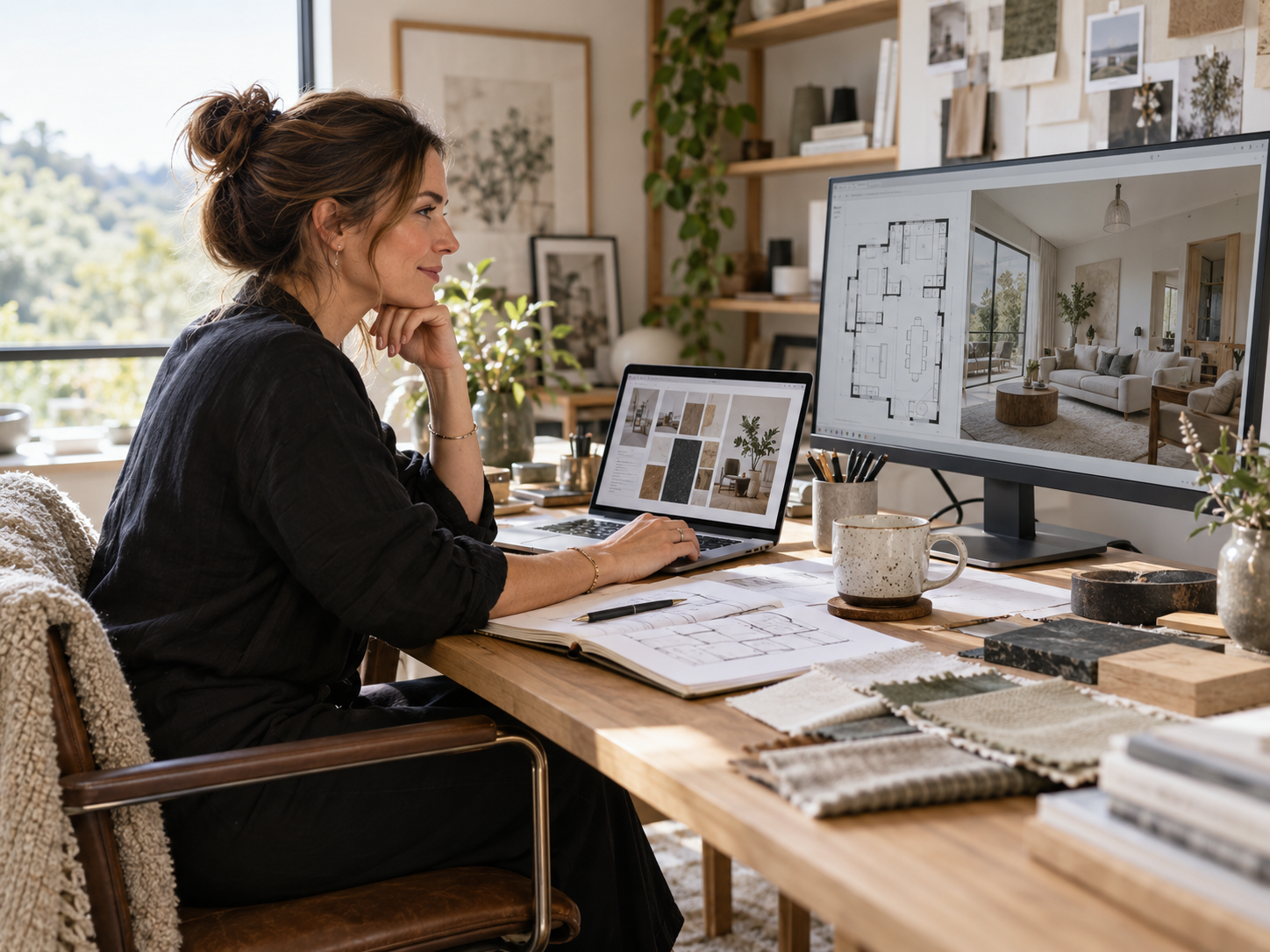
If a professional does not need to be physically seated inside an office to perform a particular role, a firm is no longer limited to the talent available within its own city. A studio can have a designer in one state, a 3D visualization specialist in another, a CAD professional in a different region, and even collaborators working from another country.
Geographic boundaries begin to matter less.
Technology made this possible, and artificial intelligence is likely to accelerate the shift even further. But there is an important distinction: allowing someone to work from home does not automatically mean that a firm is truly prepared for remote work.
There is a significant difference between having people working remotely and having an operation intentionally designed to function that way.
In a traditional office, many weaknesses in a process are quietly compensated for by physical proximity. Someone can stand up, walk across the room, show a screen, confirm a decision, or quickly clarify a question. In a distributed team, that informality is no longer enough.
Information has to be organized. Instructions need to be clear. Files need to follow standards. Responsibilities need to be well defined. The process has to work even when the people involved are not in the same room.
Interestingly, that pressure can make firms better.
Remote work exposes fragile processes. If a project only works because everyone is sitting in the same room and constantly solving small communication failures verbally, perhaps distance is not the real problem. Perhaps the process still depends too heavily on improvisation.
Distributed teams need stronger documentation, better version control, clearer decision records, and a defined understanding of who reviews, who approves, and who executes each stage. In other words, remote work demands something every firm should pursue regardless of where its team is located: organization.
This transformation also creates new possibilities for how design studios are structured.
For years, many firms have searched for generalists capable of taking on several stages of a project. That will continue to have value, but remote work allows for another model: instead of relying only on a fixed in-house team, a studio can build a network of specialists.
One project may require someone highly skilled in technical documentation. Another may need a strong 3D visualization professional. A different project may involve an intensive FF&E sourcing and specification phase. In some cases, it may be more efficient to connect different specialists to a project precisely when their expertise is most valuable.
In that model, competence begins to matter more than geographic proximity.
For professionals, this shift brings both opportunity and challenge. Remote work expands the market and creates access to firms in other cities, states, and countries. At the same time, it increases competition. If a company can hire from almost anywhere, it also gains access to a much larger pool of candidates.
That is why I believe the interior design professional of the future will need to offer much more than software proficiency.
Knowing AutoCAD, SketchUp, Revit, rendering software, or AI tools will remain important, but technical skills will be only part of the equation. Professionals will also need to interpret briefs, organize files, communicate ideas clearly, understand priorities, work independently, receive feedback well, and deliver information in a way that any member of the team can understand.
In a remote environment, communication and organization are no longer secondary qualities. They become part of professional competence itself.
The rise of artificial intelligence makes this even more visible.
AI will likely continue reducing the time required for many operational tasks. Research can be done faster. Presentations can be structured in less time. Images can be developed in minutes. Large amounts of information can be organized more efficiently.
But reducing the time required to complete a task does not eliminate the need for professionals and their tacit knowledge. It changes where professional value sits.
A tool can generate dozens of images quickly, but someone still has to understand which one truly represents the project. It can suggest products, but someone has to evaluate scale, proportion, budget, availability, durability, and aesthetic coherence. AI can help structure a presentation, but someone still needs to create the narrative that allows a client to understand why certain decisions were made.
Technology accelerates the process. The professional remains responsible for context.
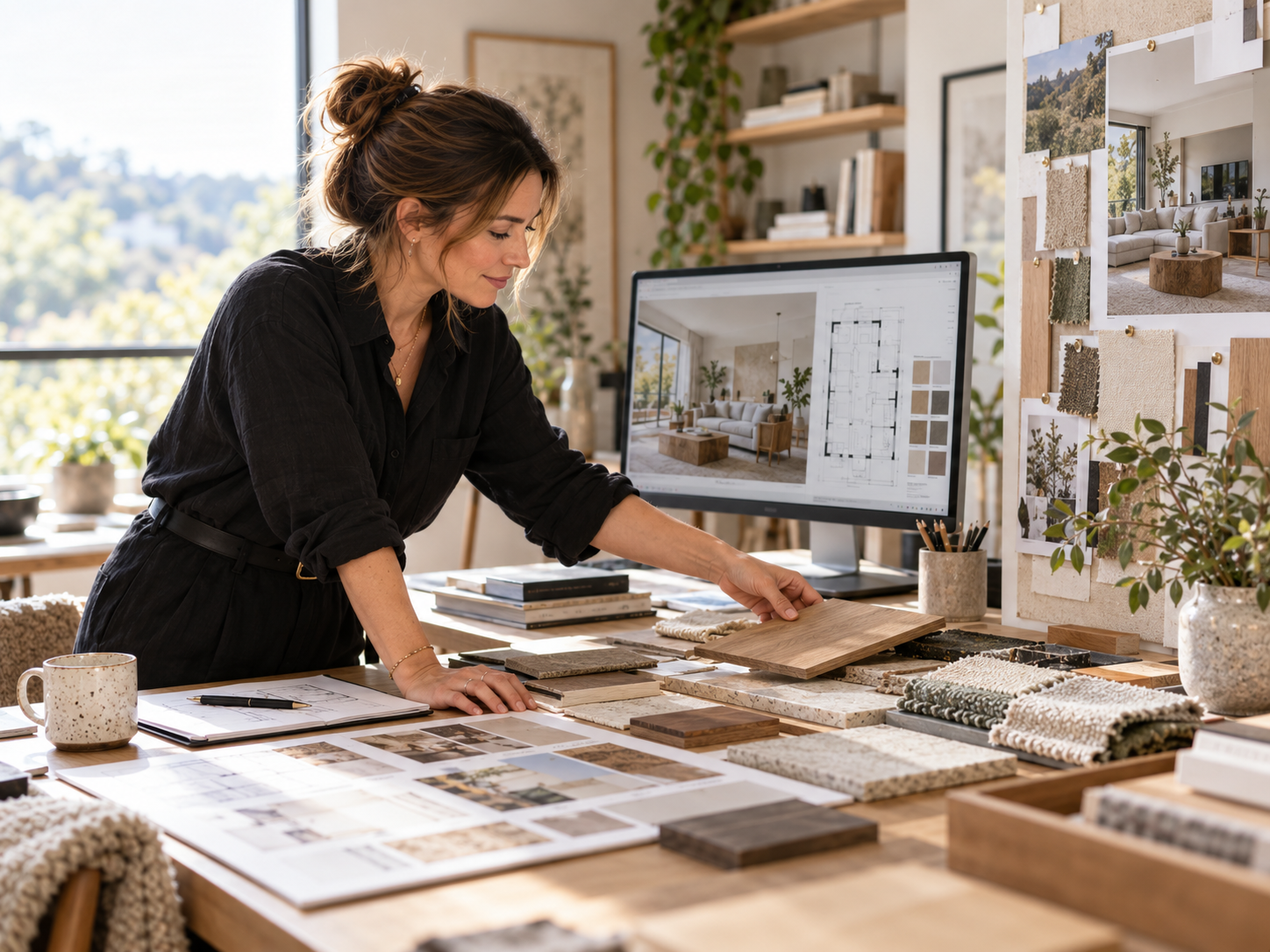
The future of design, therefore, may not be a competition between professionals and artificial intelligence. The real difference may be between those who learn how to integrate these tools into their work and those who continue to treat AI as a distraction or interference in the human creative process.
The same applies to firms.
Companies that learn how to structure digital processes and embrace technology will be able to access talent that was previously out of reach. Small studios may work with specialists without necessarily expanding their physical footprint. Teams can become more flexible, and different professionals can participate in a project only at the stages where their expertise creates the most value.
The design studio of the future may not necessarily be a large room filled with desks. It may be a leaner central structure connected to a network of professionals working from different places.
That does not mean physical studios, in-person meetings, client visits, or jobsite coordination will disappear. Design will remain a deeply human profession. We need to observe spaces, touch materials, understand people, and recognize behaviors that often never appear in a written brief.
The point is not to replace presence. It is to understand “when” presence truly creates value.
Perhaps one of the most important questions for the next few years is this: what needs to be done in person because it genuinely requires physical presence, and what do we still do in person simply because that is how it has always been done?
Technology has already removed many of the limitations that once required entire teams to be in the same place. Artificial intelligence is accelerating that transformation and making it increasingly clear that talent, collaboration, and the ability to deliver no longer need to be concentrated under one address.
Perhaps that is the real meaning of design without borders.
Not only projects that cross cities, states, or countries, but teams built more flexibly, professionals able to collaborate from anywhere, and studios that begin to prioritize competence over geographic proximity.
Physical boundaries are becoming less important. Roles are evolving. The relationship between technology and human work is being redrawn. And the very definition of a design studio is beginning to change with them.
The question is no longer whether this transformation will happen.
It is already happening.
The real question is whether professionals and firms will be prepared to work in a market where borders matter less and less.
Karine Bastos Bio
Karine Bastos is a Brazilian architect and interior designer with 13 years of experience in residential and commercial projects. For the past 8 years, she has led her own design studio, developing interior projects with a strong focus on functionality, aesthetics, and attention to detail. In addition to her experience in the Brazilian market, she has also been working remotely with U.S. based design and construction firms for the past 2 years, collaborating on residential projects and contributing to different stages of the design process. Her experience includes interior design, 3D visualization, technical documentation, FF&E sourcing, and the integration of new technologies into creative and project development workflows.
Follow on LinkedIn: https://www.linkedin.com/in/karine-bastos-739b6077/